
Quality Control refers to the operational techniques and activities used to monitor, inspect, test, and verify that construction work, materials, and systems meet specified requirements and performance standards through systematic examination, measurement, and corrective action procedures implemented during project execution. This essential component of construction management focuses on detecting and correcting defects, non-conformance, and performance deficiencies before they become permanent parts of the finished project, ensuring compliance with plans, specifications, building codes, and industry standards while protecting project stakeholders from costly rework and potential liability issues.
Quality Control
|
|
|---|---|
| Category | Construction Management, Performance Verification |
| Subfield | Inspection Services, Materials Testing, Compliance Monitoring |
| Key Characteristics | Defect detection, compliance verification, corrective action |
| Primary Applications | Construction inspection, materials testing, system verification |
| Industry Impact | Project quality, risk mitigation, regulatory compliance |
| Sources: ASTM Standards, ACI Guidelines, AISC Specifications, Building Code Requirements | |
Other Names
QC, inspection services, quality verification, compliance testing, construction inspection, materials testing, performance monitoring, quality checking
History
1900s-1920s: Early Construction Inspection
Formal quality control in construction emerged during the early 20th century as building complexity increased and catastrophic failures highlighted the need for systematic inspection and testing procedures. Early quality control focused primarily on materials testing for major infrastructure projects including bridges, dams, and public buildings where failure could result in significant loss of life and property. Government projects began requiring independent inspection services to verify contractor compliance with specifications and ensure public safety and proper use of taxpayer funds.
1930s-1950s: Standardization and Professional Development
The Great Depression and World War II construction programs drove development of standardized testing procedures and professional training programs for construction inspectors and testing technicians. Organizations including the American Concrete Institute (ACI) and American Institute of Steel Construction (AISC) developed technical standards and certification programs that ensured consistent quality control practices across the industry. Post-war construction boom created demand for trained quality control personnel and established quality control as an essential construction industry profession.
1960s-1980s: Regulatory Framework Development
Building code development and liability concerns led to more comprehensive quality control requirements including mandatory inspection and testing for structural systems, fire protection, and life safety components. Professional licensing and certification requirements were established for quality control personnel working on critical construction activities including welding inspection, concrete testing, and special inspection services. Insurance industry requirements and professional liability concerns encouraged broader adoption of quality control procedures as risk management tools.
1990s-2000s: Technology Integration
Computer technology and advanced testing equipment revolutionized quality control practices by enabling faster, more accurate testing and improved documentation and reporting capabilities. Non-destructive testing methods including ultrasonic testing, radiographic inspection, and ground-penetrating radar expanded quality verification capabilities without damaging completed work. Database systems and digital photography improved quality control documentation and enabled better tracking of quality trends and performance over time.
2010s-Present: Digital Transformation
Mobile technology, cloud computing, and digital platforms transformed quality control practices by enabling real-time documentation, instant communication, and automated reporting that improves efficiency and responsiveness. Building Information Modeling (BIM) integration allows quality control activities to be planned and tracked digitally while providing visual documentation of inspection results and corrective actions. Artificial intelligence and machine learning applications provide automated defect detection and predictive analysis that enhance traditional quality control methods.
Technical Specifications
Inspection and Testing Procedures
Quality control procedures include visual inspection techniques, dimensional verification, materials testing, and performance testing that verify compliance with project specifications and applicable standards. Inspection frequencies and sampling rates are established based on risk assessment, material criticality, and statistical requirements that ensure adequate coverage while managing costs and schedule impacts. Testing methods follow established standards including ASTM specifications, manufacturer requirements, and project-specific criteria that define acceptable performance limits and testing protocols.
Documentation and Reporting Standards
Quality control documentation includes detailed inspection reports, test certificates, photographic evidence, and non-conformance reports that provide verifiable evidence of compliance or identify required corrective actions. Reporting formats and content requirements are specified in project documents and must include sufficient detail to support decision-making and provide legal protection for project stakeholders. Chain of custody procedures and certified testing laboratories ensure test result validity and admissibility for warranty and legal purposes.
Applications
Structural Systems Quality Control
Structural quality control includes inspection and testing of foundations, framing systems, connections, and load-bearing elements to verify compliance with structural design requirements and building codes. Concrete quality control involves testing of fresh and hardened concrete properties including strength, durability, and placement quality to ensure structural adequacy and service life performance. Steel construction quality control focuses on material certifications, welding inspection, and connection verification to ensure structural integrity and code compliance.
Building Systems and Specialty Applications
Mechanical, electrical, and plumbing systems require specialized quality control procedures including functional testing, performance verification, and commissioning activities that ensure systems operate as designed. Building envelope quality control includes testing of waterproofing, air barriers, and thermal performance to prevent moisture infiltration and energy losses that could affect building performance and occupant comfort. Fire protection systems require comprehensive testing and inspection to verify compliance with life safety requirements and regulatory standards.
Best Practices
Systematic Quality Control Planning
Effective quality control requires comprehensive planning that identifies critical control points, establishes inspection and testing schedules, and defines acceptance criteria and corrective action procedures. Quality control plans should be developed collaboratively with design professionals, contractors, and specialty consultants to ensure appropriate coverage and resource allocation. Regular plan updates accommodate design changes, field conditions, and lessons learned to maintain quality control effectiveness throughout project execution.
Training and Competency Management
Quality control personnel require appropriate technical training, certification, and ongoing professional development to ensure competent performance of inspection and testing activities. Training programs should address applicable codes and standards, testing procedures, equipment operation, and documentation requirements specific to assigned responsibilities. Competency verification through testing, observation, and performance evaluation ensures quality control personnel maintain required skill levels and knowledge currency.
Industry Standards
Testing and Inspection Standards
ASTM International standards provide comprehensive testing methods and performance criteria for construction materials including concrete, steel, wood, and specialty products used in building construction. American Concrete Institute (ACI) standards establish requirements for concrete testing, inspection, and quality control procedures including fresh concrete testing, strength verification, and durability assessment. American Institute of Steel Construction (AISC) specifications address steel fabrication and erection quality control including material certification, welding inspection, and connection verification requirements.
Professional Certification and Training
Professional organizations including the American Concrete Institute (ACI), American Welding Society (AWS), and International Code Council (ICC) provide certification programs for quality control technicians and inspectors in specialized construction activities. Certification requirements typically include education, experience, and examination components with continuing education needed to maintain certification status. Industry training programs ensure consistent application of quality control procedures and maintain professional competency standards across the construction industry.
Key Considerations
Planning Phase
Quality control planning must consider project complexity, risk levels, regulatory requirements, and stakeholder expectations to develop appropriate inspection and testing strategies. Resource requirements including personnel, equipment, and laboratory services must be identified and scheduled to ensure adequate coverage without impacting project schedule or budget. Quality control objectives should be clearly defined and measurable to enable objective evaluation of compliance and performance throughout project execution.
Implementation
Quality control implementation requires coordination with construction activities to ensure inspections and testing occur at appropriate times without causing unnecessary delays or conflicts with ongoing work. Communication protocols must ensure quality control results are promptly communicated to appropriate decision-makers and corrective actions are implemented before subsequent work proceeds. Documentation procedures must capture all required information while maintaining efficiency and minimizing administrative burden on field personnel.
Independence and Objectivity
Quality control effectiveness requires appropriate independence from production pressures and conflicts of interest that could compromise objective evaluation and reporting of compliance issues. Third-party testing and inspection services provide independence but require careful selection and management to ensure competency and reliability. Clear roles and responsibilities help maintain appropriate separation between production and quality control functions while ensuring effective communication and coordination.
Technology and Equipment
Quality control equipment must be properly calibrated, maintained, and operated by trained personnel to ensure accurate and reliable test results. Technology selection should consider accuracy requirements, environmental conditions, and user capabilities to ensure effective implementation and adoption. Digital documentation and reporting systems can improve efficiency and accuracy while providing better data management and analysis capabilities.
Cost Management
Quality control costs must be balanced against project budgets while ensuring adequate coverage of critical quality requirements and regulatory compliance needs. Cost-effective quality control strategies focus resources on highest-risk areas and most critical quality parameters while maintaining overall project quality objectives. Value engineering approaches can optimize quality control effectiveness while managing costs through improved efficiency and selective application of testing and inspection resources.
Common Issues
Inadequate sampling or testing frequency can result in undetected quality problems that become expensive to correct after subsequent work is completed or the project is occupied. Poor communication and coordination between quality control personnel and construction teams can result in missed inspection opportunities or delays in addressing non-conformance issues. Insufficient documentation or unclear reporting can create disputes about compliance status and complicate corrective action procedures.
Project Impact
Risk Mitigation and Compliance
Effective quality control significantly reduces project risks including structural failures, performance deficiencies, and regulatory violations that could result in expensive repairs, legal liability, and reputation damage. Early detection and correction of quality problems prevents costly rework and maintains project schedules while ensuring compliance with building codes and performance specifications. Quality control documentation provides essential evidence for warranty claims, insurance coverage, and legal protection throughout building service life.
Performance and Value Protection
Systematic quality control ensures construction projects meet intended performance requirements including structural integrity, energy efficiency, and operational reliability that protect owner investments and occupant safety. Quality verification provides confidence that building systems will perform as designed while meeting maintenance and service life expectations. Improved quality consistency reduces long-term maintenance costs and enhances building value and marketability.
Industry Impact
Professional Standards and Safety
Construction industry quality control practices have significantly improved building safety and performance by establishing professional standards and ensuring consistent application of technical requirements and best practices. Quality control requirements in building codes and project specifications have elevated construction industry standards and encouraged investment in training and equipment among contractors and testing organizations. Research and development in quality control methods continues to improve construction industry capabilities and reliability.
Technology Development
Quality control needs have driven development of advanced testing equipment, non-destructive evaluation methods, and digital documentation systems that benefit the broader construction industry and related technical fields. Innovation in real-time monitoring, automated testing, and predictive analysis enhances quality control capabilities while reducing costs and schedule impacts. Integration of quality control with project management and building information systems improves overall project delivery efficiency and effectiveness.
Current Debates
Traditional vs. Technology-Enhanced Methods
The construction industry continues to evaluate the appropriate balance between traditional inspection and testing methods and emerging technologies including automated monitoring, artificial intelligence, and remote inspection capabilities. Technology advocates emphasize efficiency, consistency, and data analysis benefits, while traditionalists stress the importance of experienced judgment and hands-on evaluation in quality assessment. Hybrid approaches that combine technological capabilities with human expertise appear to offer optimal solutions for most applications.
Risk-Based vs. Prescriptive Quality Control
Ongoing discussions address whether quality control should follow prescriptive requirements or risk-based approaches that focus resources on highest-risk areas and most critical quality parameters. Risk-based advocates argue for more efficient resource allocation and improved cost-effectiveness, while prescriptive supporters emphasize consistency and comprehensive coverage regardless of perceived risk levels. Regulatory acceptance and liability considerations significantly influence the adoption of risk-based quality control approaches.
Related Technologies
Non-Destructive Testing Equipment
Advanced non-destructive testing equipment including ultrasonic thickness gauges, ground-penetrating radar, and thermal imaging cameras enable quality verification without damaging completed work or requiring invasive investigation procedures. Portable testing equipment and field laboratories provide rapid test results that enable immediate decision-making and corrective action without waiting for off-site laboratory analysis. Real-time monitoring systems can continuously track critical parameters including temperature, moisture, and structural movement throughout construction and early occupancy periods.
Digital Documentation Systems
Mobile applications and cloud-based documentation systems enable real-time quality control reporting with integrated photography, voice notes, and automatic report generation that improves efficiency and accuracy. Digital workflow management coordinates quality control activities with construction schedules and automatically alerts stakeholders to compliance issues or corrective action requirements. Data analytics capabilities identify quality trends and patterns that support continuous improvement and predictive quality management strategies.
Research and Development
Automated Quality Assessment
Artificial intelligence and machine learning applications analyze photographs, sensor data, and test results to automatically identify potential quality issues and recommend corrective actions with accuracy approaching or exceeding human inspection capabilities. Computer vision systems can measure dimensions, identify defects, and verify installation compliance with approved drawings and specifications. Predictive analytics help identify quality problems before they occur based on historical data and real-time monitoring of construction conditions.
Integrated Quality Management Platforms
Development of comprehensive quality management systems that integrate with Building Information Modeling (BIM), project management, and construction administration platforms provides seamless quality control workflows and real-time project quality status. Interoperability standards facilitate data exchange between different quality control tools and project systems for improved coordination and decision-making. Mobile and cloud technologies enable field personnel to access and update quality information in real-time while maintaining data security and backup protection.
FAQs
What is the difference between quality control and quality assurance?
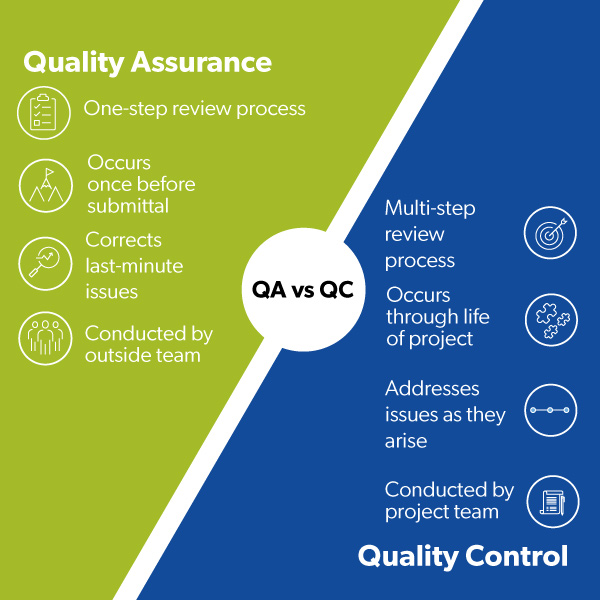
Quality control focuses on detecting and correcting defects through inspection, testing, and verification activities during construction, while quality assurance emphasizes preventing defects through systematic planning, procedures, and process management. Quality control is reactive and product-oriented, verifying that completed work meets requirements, whereas quality assurance is proactive and process-oriented, establishing systems to ensure quality outcomes. Effective quality management programs incorporate both quality control and quality assurance elements for comprehensive quality oversight.
Who typically performs quality control activities on construction projects?
Quality control activities are performed by various stakeholders including contractor personnel, independent testing agencies, specialty consultants, and building officials depending on the specific requirements and project complexity. Contractors typically provide first-level quality control through supervision and self-inspection, while independent third parties provide verification and testing services for critical elements. Building officials conduct regulatory inspections for code compliance, and specialty consultants may provide expert quality control services for complex systems or materials.
What types of testing are commonly required for construction quality control?
Common construction quality control testing includes concrete strength testing, soil compaction verification, steel material certification, welding inspection, and building envelope performance testing depending on project requirements and regulatory standards. Specialized testing may include fire-resistance verification, seismic connection inspection, and environmental compliance monitoring for specific project conditions. Testing requirements are typically specified in project documents and building codes with frequencies and acceptance criteria established for each type of test.
How do quality control costs affect project budgets?
Quality control costs typically represent 1-5% of total project costs depending on project complexity, testing requirements, and risk levels, with higher percentages justified for critical infrastructure or high-risk projects. Quality control investments generally provide positive returns through defect prevention, reduced rework costs, and improved long-term performance that exceeds the initial testing and inspection expenses. Budget planning should consider both direct quality control costs and potential impacts of inadequate quality control on project schedule and performance.
What documentation is required for construction quality control activities?
Quality control documentation typically includes inspection reports, test certificates, material certifications, photographic records, and non-conformance reports that provide verifiable evidence of compliance with project requirements. Documentation must be sufficiently detailed to support decision-making, warranty claims, and legal requirements while being accessible to relevant stakeholders throughout project execution and building operation. Digital documentation systems enable efficient storage, retrieval, and sharing of quality control records while maintaining data security and backup protection.
References
- ACI Guidelines. (2023). American Concrete Institute – Concrete Testing and Quality Control Standards.
- AISC Specifications. (2023). American Institute of Steel Construction – Steel Construction Quality Control Requirements.
- ASTM Standards. (2023). ASTM International – Construction Materials Testing and Quality Control Standards.
- Building Code Requirements. (2023). International Code Council – Quality Control and Inspection Requirements.