
Y-Branch refers to a plumbing, drainage, HVAC fitting that creates a junction where one main pipe divides into two branch lines at approximately 45-degree angles, resembling the letter “Y” and enabling efficient fluid flow distribution while minimizing turbulence and pressure loss compared to other branching configurations. This essential plumbing component facilitates smooth flow transitions in drainage, waste, vent, and water distribution systems by providing gradual directional changes that reduce hydraulic resistance and prevent blockages, making it particularly valuable in gravity-fed drainage applications where maintaining flow velocity and preventing sediment accumulation are critical for system performance and longevity.
Y-Branch
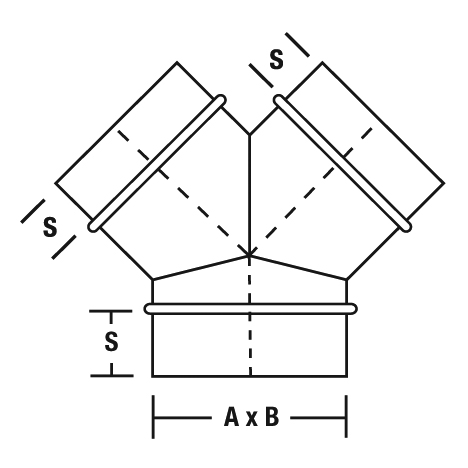
Figure 1. Y-Branch Duct Fitting Diagram |
|
|---|---|
| Category | Plumbing Fittings, Drainage Systems, HVAC |
| Subfield | Mechanical Systems, Water Management, Pipe Fittings |
| Key Characteristics | 45-degree branching, smooth flow transition, pressure loss reduction |
| Primary Applications | Drainage systems, waste piping, vent systems, water distribution |
| Industry Impact | System efficiency, installation versatility, maintenance accessibility |
| Sources: ASTM Standards, IPC Requirements, Manufacturer Specifications, Hydraulic Engineering Guidelines | |
Other Names
Wye fitting, Y-fitting, lateral branch, 45-degree branch, drainage wye, waste tee, branch fitting, junction fitting, Y-connector
History
1800s-Early 1900s: Cast Iron Pipe Development
Y-branch fittings emerged during the development of cast iron drainage systems in the late 1800s as plumbers and engineers recognized the hydraulic advantages of gradual flow transitions over abrupt 90-degree connections in gravity-fed drainage applications. Early cast iron Y-branches were manufactured using sand casting techniques that produced heavy but durable fittings with smooth interior surfaces that promoted efficient drainage flow. The standard 45-degree angle was established through practical experience demonstrating optimal balance between space efficiency and hydraulic performance in building drainage systems.
1920s-1950s: Material and Manufacturing Evolution
Advances in metallurgy and manufacturing processes improved Y-branch production quality and consistency while reducing costs and installation requirements compared to earlier cast iron systems. The development of threaded and bell-and-spigot connection methods enabled more reliable joint assembly while specialized coating treatments improved corrosion resistance and service life. Building code development during this period established standardized sizing and installation requirements that ensured consistent performance and interchangeability among different manufacturers.
1960s-1980s: Plastic Material Introduction
Introduction of plastic pipe materials including PVC, ABS, and polyethylene revolutionized Y-branch manufacturing by enabling lightweight, corrosion-resistant fittings with smooth interior surfaces and simplified installation methods. Injection molding and extrusion manufacturing processes provided precise dimensional control and consistent quality while dramatically reducing material and installation costs. Plastic Y-branches offered significant advantages including chemical resistance, ease of handling, and compatibility with solvent welding and mechanical joining systems.
1990s-2000s: Performance Optimization
Advanced fluid dynamics research and computer modeling enabled optimization of Y-branch internal geometry to minimize pressure losses and turbulence while maintaining practical manufacturing and installation requirements. Specialized formulations and manufacturing techniques produced high-performance fittings for specific applications including high-temperature, chemical-resistant, and specialized drainage systems. Quality control improvements and standardized testing procedures ensured consistent performance and reliability across different manufacturers and applications.
2010s-Present: Smart Integration and Sustainability
Modern Y-branch development emphasizes integration with smart plumbing systems, sustainable materials, and advanced manufacturing techniques that improve performance while reducing environmental impact. Recycled content materials and bio-based plastics address environmental concerns while maintaining performance and cost competitiveness. Digital design tools and 3D printing technologies enable custom fitting production for specialized applications while maintaining quality and delivery performance.
Technical Specifications
Hydraulic Design and Flow Characteristics
Y-branch fittings are designed with 45-degree branch angles that provide optimal balance between flow efficiency and space utilization, with smooth interior transitions that minimize turbulence and pressure loss compared to abrupt direction changes. Flow characteristics include approximately 15-30% lower pressure loss compared to 90-degree tee fittings, improved sediment transport in drainage applications, and reduced noise generation in pressurized systems. Sizing follows standard pipe dimensions with branch outlets typically equal to or smaller than main inlet diameter depending on flow distribution requirements and system design parameters.
Material Properties and Standards
Y-branch materials include PVC, ABS, cast iron, copper, and stainless steel with selection based on application requirements including chemical compatibility, temperature resistance, pressure ratings, and environmental conditions. Material standards establish requirements for strength, chemical resistance, dimensional accuracy, and joint compatibility that ensure reliable performance and system integration. Manufacturing standards address quality control, testing procedures, and marking requirements that enable proper selection and installation by plumbing professionals.
Applications
Drainage and Waste Systems
Drainage applications utilize Y-branches to connect branch drain lines to main building drains while maintaining flow velocity and preventing backflow that could cause blockages or system failure. Waste system applications include connecting multiple fixture drains, creating cleanout access points, and transitioning between different pipe sizes while preserving hydraulic efficiency. Gravity drainage systems particularly benefit from Y-branch geometry that maintains downward flow momentum and prevents sediment accumulation that could reduce system capacity over time.
Water Distribution and Vent Systems
Water distribution systems use Y-branches to divide supply lines while minimizing pressure loss and maintaining adequate flow rates to downstream fixtures and equipment. Vent system applications include connecting individual fixture vents to main vent stacks and creating loop vents that ensure proper drainage system operation and building code compliance. HVAC applications may utilize Y-branches in condensate drainage and specialized piping systems that require efficient flow distribution and minimal pressure loss.
Best Practices
Selection and Sizing
Proper Y-branch selection requires analysis of flow requirements, pressure conditions, and system layout to ensure adequate capacity and performance while minimizing installation complexity and cost. Sizing calculations should consider flow distribution, velocity requirements, and pressure loss limitations that affect overall system performance and efficiency. Material compatibility verification ensures appropriate chemical resistance and thermal performance for specific applications and environmental conditions.
Installation and Connection Methods
Professional installation techniques ensure proper alignment, secure connections, and code compliance while minimizing installation time and potential problems including leaks and flow restrictions. Connection methods including solvent welding, mechanical couplings, and threaded joints require appropriate preparation and assembly techniques to ensure reliable long-term performance. Support and anchoring requirements prevent stress on fittings and connections while accommodating thermal expansion and normal building settlement.
Industry Standards
Performance and Testing Standards
ASTM International standards establish comprehensive requirements for Y-branch materials, dimensions, and performance including pressure testing, chemical resistance, and durability under various environmental conditions. International Plumbing Code (IPC) and Uniform Plumbing Code (UPC) requirements address installation methods, sizing calculations, and system design criteria that ensure proper Y-branch application and building code compliance. Manufacturer testing standards verify product quality and performance while providing data for engineering calculations and system design.
Installation and Code Compliance
Building codes establish requirements for Y-branch installation including proper orientation, support spacing, and connection methods that ensure system performance and safety while facilitating inspection and maintenance access. Professional installation standards address joint preparation, assembly techniques, and quality control procedures that ensure reliable connections and long-term performance. Local plumbing codes may impose additional requirements based on regional conditions and specific application needs.
Key Considerations
Planning Phase
System design planning must consider flow requirements, pipe routing constraints, and access needs that affect Y-branch selection and placement throughout plumbing and drainage systems. Hydraulic calculations should verify adequate capacity and performance under peak flow conditions while ensuring compliance with building codes and manufacturer recommendations. Coordination with other building systems ensures proper clearances and installation sequences that prevent conflicts and enable efficient construction progress.
Implementation
Installation planning should address material handling, tool requirements, and worker safety while ensuring proper assembly techniques and quality control throughout the installation process. Pressure testing and inspection procedures verify system integrity and code compliance before concealment and system activation. Documentation of installed systems including fitting locations and specifications supports future maintenance and modification activities.
Material and Environmental Factors
Chemical compatibility assessment ensures Y-branch materials are appropriate for intended fluids and environmental conditions including temperature variations, UV exposure, and potential chemical contamination. Thermal expansion considerations may require special installation techniques or expansion joints to prevent stress on fittings and connections during temperature cycling. Corrosion protection measures including proper grounding and cathodic protection may be required for metallic fittings in aggressive soil or water conditions.
Hydraulic Performance
Flow analysis should verify that Y-branch installation maintains adequate system capacity and performance while preventing problems including excessive pressure loss, inadequate drainage velocity, and potential backflow conditions. Velocity calculations ensure proper sediment transport in drainage applications while preventing erosion damage in high-velocity water distribution systems. System balancing may require flow control devices or pipe sizing adjustments to ensure proper flow distribution among branch circuits.
Maintenance and Accessibility
Installation design should consider maintenance access requirements including cleanout placement, inspection capabilities, and potential component replacement needs that affect long-term system serviceability. Identification and documentation of Y-branch locations facilitates troubleshooting and maintenance activities while ensuring compliance with code requirements for access and inspection. Replacement planning should consider material availability and installation constraints that affect future maintenance and system modifications.
Common Issues
Improper installation including incorrect orientation or inadequate support can cause flow problems, joint failure, or system damage that requires costly repairs and potential code compliance issues. Blockages at Y-branch junctions may result from sediment accumulation, improper flow velocity, or installation debris that requires cleaning and potential system modification. Joint leaks often result from improper assembly techniques, material incompatibility, or excessive stress that compromises connection integrity and system performance.
Project Impact
System Performance and Efficiency
Proper Y-branch application significantly improves plumbing system performance by reducing pressure losses, maintaining flow velocity, and preventing blockages that could compromise system function and require expensive repairs. Hydraulic efficiency benefits include improved drainage capacity, reduced pump energy requirements, and enhanced system reliability that supports building operation and occupant satisfaction. Quality Y-branch installation contributes to overall system longevity and reduces maintenance requirements throughout building service life.
Installation and Cost Benefits
Y-branch fittings often provide installation advantages including reduced excavation requirements, simplified pipe routing, and improved access for future maintenance compared to alternative fitting configurations. Cost benefits include reduced material requirements, faster installation times, and improved system reliability that reduces long-term maintenance and replacement costs. Standardized sizing and connection methods enable efficient procurement and installation while ensuring consistent quality and performance.
Industry Impact
Plumbing System Design and Efficiency
Y-branch fitting development has significantly influenced plumbing system design by enabling more efficient pipe routing and improved hydraulic performance while maintaining practical installation and maintenance requirements. Standardized dimensions and connection methods facilitate system design and component interchangeability while ensuring consistent performance across different manufacturers and applications. Research into flow optimization continues to improve Y-branch design and expand application possibilities in various plumbing and mechanical systems.
Manufacturing and Material Innovation
Y-branch manufacturing has driven innovations in plastic processing, quality control, and cost reduction that benefit the broader plumbing and pipe fitting industries. Material science advances including improved chemical resistance, thermal performance, and manufacturing efficiency continue to expand Y-branch capabilities while reducing costs and environmental impact. Automation and quality control improvements ensure consistent product quality while enabling competitive pricing and reliable supply chain performance.
Current Debates
Material Selection and Sustainability
Ongoing discussions address the balance between performance requirements and environmental considerations in Y-branch material selection, with increasing emphasis on recycled content, bio-based materials, and end-of-life recyclability. Traditional materials including cast iron and copper offer proven durability but higher environmental impact, while plastic alternatives provide cost and performance advantages with evolving sustainability characteristics. Life cycle assessment studies inform material selection decisions while considering performance, cost, and environmental factors throughout product life cycles.
Code Requirements and Performance Standards
Industry discussions continue regarding appropriate building code requirements for Y-branch installation and performance, balancing safety and functionality with installation flexibility and cost considerations. Some professionals advocate for performance-based standards that allow innovative designs and materials, while others prefer prescriptive requirements that ensure consistent installation quality. Harmonization of different code jurisdictions and international standards remains an ongoing challenge affecting product development and market access.
Related Technologies
Advanced Manufacturing and Quality Control
Computer-controlled injection molding and automated quality control systems enable precise Y-branch production with consistent dimensions and performance characteristics while reducing manufacturing costs and defect rates. Advanced materials including high-performance plastics and composite materials expand Y-branch capabilities for specialized applications including high-temperature, chemical-resistant, and structural piping systems. Digital design tools and finite element analysis optimize fitting geometry and performance while maintaining manufacturing feasibility and cost-effectiveness.
Smart Plumbing Integration
Emerging smart plumbing technologies include sensors and monitoring systems that can be integrated with Y-branch installations to provide real-time flow monitoring and leak detection capabilities. Internet of Things (IoT) applications enable remote monitoring and diagnostics that support predictive maintenance and system optimization. Integration with building automation systems provides comprehensive facility management capabilities that optimize performance and reduce operational costs.
Research and Development
Flow Optimization and Performance Enhancement
Computational fluid dynamics (CFD) analysis and advanced testing methods continue to optimize Y-branch internal geometry for improved hydraulic performance while maintaining practical manufacturing and installation requirements. Research into turbulence reduction, pressure loss minimization, and flow distribution uniformity explores design improvements that enhance system efficiency and reliability. Studies of long-term performance and failure modes inform design improvements and material selection for enhanced durability and service life.
Sustainable Materials and Manufacturing
Development of bio-based and recycled content materials addresses environmental concerns while maintaining performance and cost competitiveness for Y-branch applications. Research into manufacturing process improvements focuses on energy efficiency, waste reduction, and environmental impact minimization throughout product life cycles. Life cycle assessment studies guide material and process selection decisions while supporting industry sustainability goals and regulatory compliance requirements.
FAQs
What is the difference between a Y-branch and a tee fitting?
A Y-branch features gradual 45-degree flow transitions that minimize turbulence and pressure loss, while tee fittings create abrupt 90-degree direction changes that increase hydraulic resistance and pressure loss. Y-branches are preferred for drainage applications where maintaining flow velocity is critical, while tees may be used where space constraints require compact connections and hydraulic efficiency is less critical. Flow characteristics differ significantly, with Y-branches providing approximately 15-30% lower pressure loss than equivalent tee fittings.
When should I use a Y-branch instead of other fitting types?
Y-branches are preferred for gravity drainage systems where maintaining flow velocity and preventing sediment accumulation are critical, main drain connections requiring minimal pressure loss, and applications where smooth flow transitions improve system performance. Use Y-branches when hydraulic efficiency is more important than space constraints, in systems with high solids content, and where building codes specify their use for specific drainage applications. Consider space limitations and installation constraints when evaluating Y-branch versus alternative fitting options.
What materials are available for Y-branch fittings?
Common Y-branch materials include PVC and ABS plastics for most drainage and waste applications, cast iron for commercial and institutional buildings, copper for water distribution systems, and stainless steel for specialized chemical or high-temperature applications. Material selection depends on fluid compatibility, temperature requirements, pressure ratings, and environmental conditions including soil chemistry and UV exposure. Local building codes may specify material requirements for different applications and building types.
How do I properly install and support Y-branch fittings?
Proper installation requires correct fitting orientation with branch outlets angled downward in drainage applications, adequate pipe support to prevent stress on connections, and appropriate connection methods including solvent welding or mechanical joints depending on material type. Support spacing should follow manufacturer recommendations and building codes while allowing for thermal expansion in long pipe runs. Pressure testing and inspection verify proper installation before system concealment and activation.
What maintenance is required for Y-branch installations?
Y-branch maintenance typically involves periodic inspection for leaks or damage, cleaning of accessible connections, and verification of proper drainage flow in gravity systems. Blockage removal may require professional drain cleaning equipment for drainage applications, while water distribution systems may need periodic flushing or pressure testing. Long-term maintenance includes joint inspection and potential replacement of worn seals or gaskets in mechanical connection systems, with replacement timing based on material type and environmental conditions.
References
- ASTM Standards. (2023). ASTM International – Standard Specifications for Plumbing Fittings and Pipe Materials.
- Hydraulic Engineering Guidelines. (2023). American Society of Civil Engineers – Hydraulic Design Standards for Plumbing and Drainage Systems.
- IPC Requirements. (2023). International Code Council – International Plumbing Code Requirements for Fittings and Installation.
- Manufacturer Specifications. (2023). Plastics Pipe Institute – Technical Standards and Installation Guidelines for Plastic Pipe Fittings.