Modern hardwood flooring combines timeless beauty with practical performance, creating floors that enhance your home’s value while withstanding daily life. Today’s homeowners are choosing styles that emphasize wide planks, natural finishes, and sustainable materials. With proper installation and maintenance, quality hardwood floors can last 30 to 100+ years, making them a smart long-term investment that typically recovers 118-147% of costs when you sell your home.
1. Wide Plank Hardwood Flooring
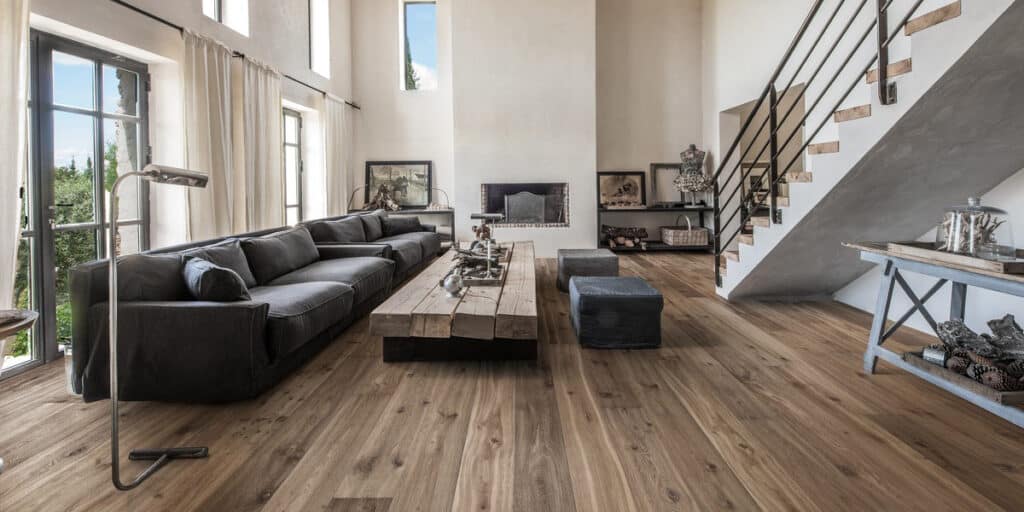
Wide plank hardwood flooring features boards that are 5 to 12 inches in width, creating a clean, continuous look with fewer seams. This format enhances the visual scale of open spaces and highlights the natural grain of the wood. Homeowners appreciate wide plank hardwood flooring for its ability to anchor modern, rustic, and transitional interiors with elegance and proportion.
Key benefits of wide plank flooring:
- Faster installation due to fewer individual planks (reduces labor costs by $1-2 per square foot)
- Creates illusion of larger spaces through fewer seam lines
- Showcases wood grain patterns more dramatically than narrow planks
- Works exceptionally well in open-concept homes and rustic design schemes
2. Hardwood Flooring in Natural and Warm Tones
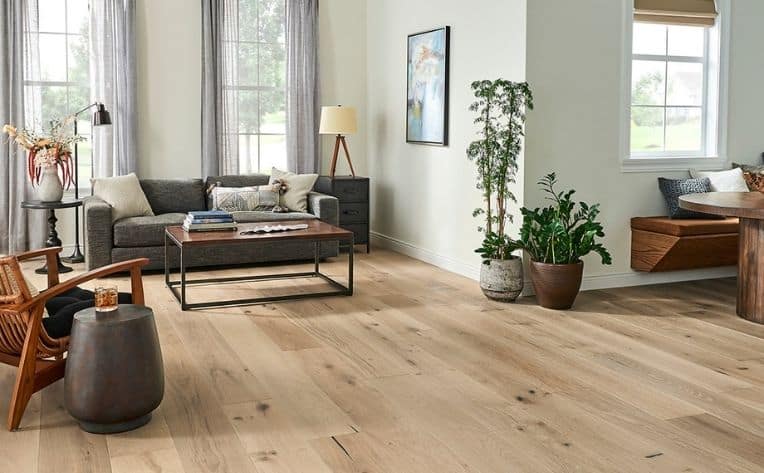
Natural and warm tones in hardwood flooring include honey-toned oak, wheat-colored maple, and deep walnut finishes. These hues bring softness and warmth to interiors without overpowering other design elements. Species like white oak and hickory are commonly selected for their durability and grain clarity, making them ideal choices for hardwood flooring that balances beauty and performance.
Popular natural tone options:
- White oak (Janka rating: 1,360) – excellent moisture resistance and versatility
- Hickory (Janka rating: 1,820) – superior durability for high-traffic areas
- Natural maple (Janka rating: 1,450) – consistent grain with warm honey tones
- Walnut (Janka rating: 1,010) – rich chocolate browns with elegant grain patterns
3. Matte and Satin Finishes in Modern Hardwood Floors
Matte and satin finishes have become preferred options in hardwood flooring for their understated elegance and practical appeal. Unlike glossy finishes, matte and satin treatments reduce surface reflectivity and highlight the natural grain of the wood. These finishes also help hide minor scuffs and dust, making them a smart choice for active households seeking easy-to-maintain hardwood flooring.
Finish comparison benefits:
- Matte finish: Reduces glare, hides scratches better, requires less frequent touch-ups
- Satin finish: Offers subtle sheen while maintaining durability, easier to clean than matte
- Both options: Last 7-10 years between refinishing versus 5-7 years for high-gloss finishes
- Modern appeal: Complements contemporary and minimalist interior styles
4. Textured Hardwood Flooring: Wire-Brushed and Hand-Scraped Styles
Textured hardwood flooring includes surface treatments like wire-brushing and hand-scraping. Wire-brushed floors expose the wood’s grain for subtle texture, while hand-scraped styles simulate vintage craftsmanship. These textures not only add visual depth but also increase traction and conceal daily wear, making textured hardwood flooring a durable and design-forward solution for high-traffic spaces.
Texture treatment advantages:
- Wire-brushed: Enhances grain visibility, improves slip resistance, hides minor dents
- Hand-scraped: Creates authentic vintage appearance, excellent wear concealment
- Both styles: Reduce need for frequent maintenance and refinishing
- Ideal for: family homes with pets and children
5. Classic Wood Flooring Patterns: Herringbone and Chevron
Herringbone and chevron are geometric layouts used specifically in hardwood flooring. In herringbone, planks are cut at 90-degree angles and laid in a staggered zigzag. Chevron flooring features planks cut on the diagonal to form a continuous V-shape. Both patterns offer architectural elegance and are often used to make a striking design statement in entryways and living areas.
Pattern installation considerations:
- Herringbone: Adds 25-40% to installation time and costs due to precise cutting requirements
- Chevron: Creates more formal appearance, requires expert installation for proper alignment
- Both patterns: Increase material waste by 10-15% compared to standard plank installation
- Best applications: formal dining rooms, grand entryways, and feature walls
6. Mixed-Width Hardwood Planks for Custom Flooring Looks
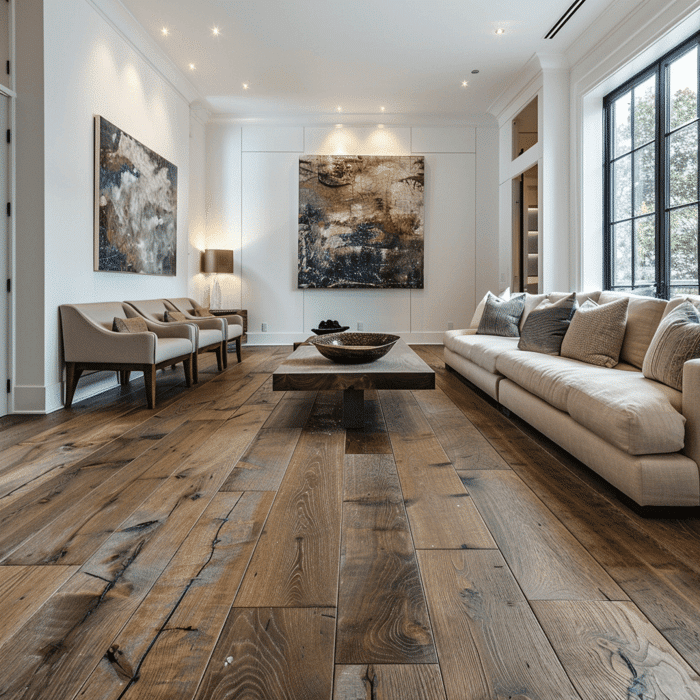
Mixed-width hardwood flooring combines planks of varying widths—such as 3-inch, 5-inch, and 7-inch boards—in one cohesive installation. This approach gives hardwood floors a handcrafted, organic aesthetic. It’s especially popular in custom home renovations where uniformity is avoided in favor of more natural, visually dynamic layouts that feel intentional and timeless.
Mixed-width design benefits:
- Creates authentic reclaimed wood appearance without the higher cost
- Allows for creative pattern variations and custom layout designs
- Reduces visual monotony in large, open spaces
- Perfect for: farmhouse-style homes and custom renovations
7. Sustainable Hardwood Flooring: Reclaimed and FSC-Certified Options
Environmentally responsible homeowners often choose hardwood flooring made from reclaimed lumber or FSC-certified sources. Reclaimed wood offers unique textures and patinas, while FSC certification ensures responsible forest management. These options reduce environmental impact and add narrative richness to interior spaces. Sustainable hardwood flooring supports long-term ecological health without sacrificing aesthetic quality.
Sustainable flooring options:
- Reclaimed wood: 100+ year old lumber with unique character, typically costs $8-15 per square foot
- FSC-certified: Responsibly harvested new lumber, usually adds $1-3 per square foot premium
- Bamboo flooring: Renewable alternative with exceptional hardness (Janka rating: 4,000-5,000)
- Environmental benefit: Reduces deforestation and supports sustainable living practices
8. Gray-Toned Hardwood Flooring: A Neutral Base for Contemporary Design
Gray-toned hardwood flooring offers a soft, contemporary palette that works well with both warm and cool interior colors. Popular finishes include driftwood gray, fog oak, and smoke-stained white oak. These subtle tones help create a calm, modern environment and are especially useful in coastal or minimalist designs. Gray hardwood flooring blends neutrality with a clean, modern feel.
Gray tone advantages:
- Versatile color palette that complements both warm and cool design schemes
- Hides dust and pet hair better than darker or lighter wood tones
- Currently trending: Driftwood gray and weathered oak finishes leading market preferences
- Ideal for: coastal homes, modern minimalist spaces, and Scandinavian-style interiors
Hardwood Flooring Cost and Installation Guide for DC Metro Area
Understanding hardwood flooring costs helps homeowners budget effectively for this significant investment. In the Washington DC metro area, hardwood flooring installation typically ranges from $10-25 per square foot, including materials and labor. Installation time varies based on project scope, but most residential projects take 1-3 days for installation plus 5-7 days for acclimation.
| Flooring Type | Cost per Sq Ft (DC Metro) | Lifespan | Janka Rating |
|---|---|---|---|
| Solid Oak Hardwood | $11-18 | 50-100+ years | 1,290 |
| Engineered Hardwood | $8-16 | 20-40 years | Varies |
| Hickory Hardwood | $12-20 | 75-100+ years | 1,820 |
| Bamboo Flooring | $7-17 | 25-50 years | 4,000+ |
| Reclaimed Wood | $15-25 | 100+ years | Varies |
Installation timeline and process:
- Acclimation: 5-7 days for materials to adjust to home humidity levels
- Installation: 1-3 days for average 1,000-1,500 square foot project
- Labor costs: $3-8 per square foot in DC metro area
- Best installation season: Fall months offer optimal temperature and humidity conditions
Final Considerations for Choosing Hardwood Flooring
When selecting hardwood flooring, consider board width, color tone, finish texture, and installation pattern. Each choice influences how the space feels and functions. By focusing on materials and layouts that match your home’s character and your lifestyle, you’ll achieve a floor that stands up to daily use while remaining beautiful and relevant for decades.
Key decision factors:
- Durability needs: Choose Janka ratings above 1,300 for high-traffic areas
- Maintenance preference: Matte and textured finishes require less frequent touch-ups
- Investment value: Quality hardwood installation typically recovers 118-147% of costs at resale
- Professional installation: Ensures proper acclimation, warranty coverage, and optimal longevity
Frequently Asked Questions About Hardwood Flooring
How long do hardwood floors last?
Solid hardwood floors can last 30-100+ years with proper maintenance, while engineered hardwood typically lasts 20-40 years. The lifespan depends on wood species, traffic levels, and maintenance quality. Harder woods like hickory and white oak generally last longer than softer species.
What’s the difference between solid and engineered hardwood?
Solid hardwood is made from a single piece of wood and can be refinished multiple times (5-8 times typically). Engineered hardwood has a plywood core with a hardwood veneer top layer and can only be refinished 1-3 times due to the thinner wear layer. Engineered is better for humid environments and basement installations.
How much does hardwood flooring cost in the DC metro area?
Hardwood flooring installation in the Washington DC metro area costs $10-25 per square foot, including materials and labor. Domestic species like oak cost $11-18 per square foot, while exotic woods can reach $20-25 per square foot. Labor accounts for $3-8 per square foot of the total cost.
Can hardwood floors be installed in kitchens and bathrooms?
Hardwood can be installed in kitchens with proper sealing and water-resistant mats near sinks. However, it’s not recommended for full bathrooms due to high moisture levels. Engineered hardwood performs better than solid wood in areas with humidity fluctuations.
How often do hardwood floors need refinishing?
Hardwood floors typically need refinishing every 7-10 years in high-traffic areas and 10-15 years in moderate-traffic spaces. Matte and satin finishes last longer than high-gloss finishes. Signs that refinishing is needed include visible scratches, worn finish, and dull appearance.
What’s the best time of year to install hardwood floors?
Fall is the optimal season for hardwood installation due to moderate humidity levels and stable temperatures. Spring can work but may bring humidity issues, while winter’s dry air can cause wood to shrink and crack. Summer is peak season but brings higher contractor costs and demand.