
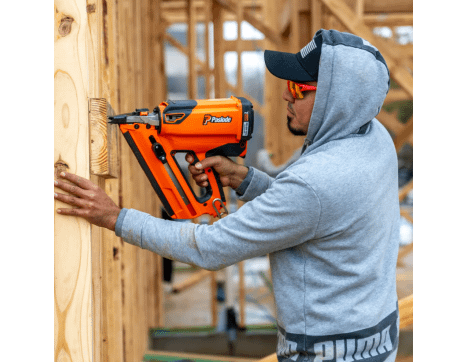
Nailer refers to a specialized power tool designed to drive nails, brads, or fasteners into wood, concrete, or other construction materials with pneumatic, electric, or gas-powered mechanisms that provide consistent depth control, rapid installation speed, and reduced physical effort compared to manual hammering. These essential construction tools range from lightweight finish nailers for trim work to heavy-duty framing nailers for structural applications, enabling efficient fastening operations while improving accuracy, safety, and productivity in residential, commercial, and industrial construction projects.
Nailer
|
|
|---|---|
| Category | Power Tools, Fastening Systems |
| Subfield | Construction Tools, Pneumatic Equipment, Carpentry |
| Key Characteristics | Powered fastening, depth control, high-speed installation |
| Primary Applications | Framing, finish work, roofing, flooring installation |
| Industry Impact | Construction efficiency, worker safety, installation quality |
| Sources: OSHA Safety Standards, Tool Manufacturer Specifications, ANSI Requirements, Construction Industry Guidelines | |
Other Names
Nail gun, pneumatic nailer, brad nailer, finish nailer, framing nailer, pin nailer, staple gun, fastening gun, air nailer, cordless nailer
History
1950s-1960s: Pneumatic Tool Development
Early pneumatic nailers were developed for industrial manufacturing applications including furniture production and packaging, where consistent fastening speed and quality provided significant productivity advantages over manual methods. Initial designs were heavy, expensive, and required substantial compressed air systems that limited their use to factory environments with permanent air supply infrastructure. Early adoption focused on repetitive manufacturing tasks where tool cost could be justified by labor savings and quality improvements.
1970s-1980s: Construction Industry Adoption
Construction industry adoption of pneumatic nailers accelerated during the housing boom as contractors recognized productivity benefits for framing, sheathing, and roofing applications. Portable air compressors and improved tool designs made pneumatic nailers practical for construction sites, dramatically reducing installation time for wood framing and enabling smaller crews to complete projects faster. Safety improvements including sequential trigger systems and improved guards reduced injury rates while maintaining productivity benefits.
1990s-2000s: Tool Specialization and Refinement
Specialized nailer designs emerged for specific applications including finish nailers for trim work, brad nailers for delicate materials, and heavy-duty framing nailers for structural applications. Improved ergonomics, weight reduction, and enhanced safety features made nailers more user-friendly while expanding their use to finish carpentry and specialty applications. The development of collated fastener systems and automated loading mechanisms improved productivity and reduced downtime for fastener reloading.
2000s-2010s: Cordless and Electric Innovation
Battery-powered cordless nailers eliminated the need for compressed air systems and provided greater mobility for finish work, repair applications, and small projects where air compressor setup was impractical. Electric nailers offered consistent power without air compressor requirements for indoor applications and situations where noise reduction was important. Gas-powered nailers provided portability and power for heavy-duty applications without requiring external power sources or air supply systems.
2010s-Present: Advanced Features and Integration
Modern nailers incorporate advanced features including brushless motors, intelligent depth control, jam-clearing mechanisms, and integration with power tool battery systems for improved performance and user convenience. Smart nailer technologies include diagnostic systems, usage tracking, and maintenance reminders that optimize tool performance and reduce downtime. Ergonomic improvements and vibration reduction technologies enhance user comfort and reduce fatigue during extended use periods.
Technical Specifications
Power Systems and Operating Mechanisms
Pneumatic nailers operate at 70-120 PSI air pressure with consumption rates of 0.5-2.0 cubic feet per minute depending on nailer size and fastener requirements. Electric nailers typically operate at 120V AC or use 18-20V lithium-ion battery systems with varying power output based on fastener size and material requirements. Gas-powered nailers use fuel cells and battery ignition systems to provide consistent power output independent of external power sources or air supply systems.
Fastener Specifications and Compatibility
Nailer fastener compatibility ranges from 15-gauge finish nails and 18-gauge brad nails for trim work to 21-degree framing nails up to 3.5 inches long for structural applications. Collated fastener systems use plastic, wire, or paper collation with angular orientations including 15-degree, 21-degree, 28-degree, and 34-degree angles that affect nailer magazine capacity and driving efficiency. Fastener material options include galvanized steel, stainless steel, and specialty coatings for specific applications and environmental conditions.
Applications
Framing and Structural Applications
Framing nailers handle heavy-duty fastening operations including wall framing, floor decking, roof sheathing, and structural panel installation with 2-inch to 3.5-inch nails that provide code-compliant structural connections. High-volume production framing relies on nailers for speed and consistency, with professional framers capable of installing thousands of fasteners per day with proper tool selection and technique. Structural applications require specific nail types, lengths, and spacing patterns that must comply with building codes and engineering requirements.
Finish Carpentry and Trim Work
Finish nailers and brad nailers provide precise fastening for trim installation, cabinet work, and decorative millwork where appearance and minimal surface damage are critical considerations. Small-gauge fasteners and controlled depth settings prevent wood splitting and surface damage while providing adequate holding power for finish applications. Pin nailers offer virtually invisible fastening for delicate trim work and temporary holding applications where minimal material damage is essential.
Best Practices
Tool Selection and Setup
Proper nailer selection requires matching tool capabilities with fastener requirements, material types, and application demands including power source availability and portability needs. Setup procedures include pressure adjustment for pneumatic tools, depth setting calibration, and safety feature verification before beginning work operations. Regular maintenance including cleaning, lubrication, and wear part replacement ensures consistent performance and extends tool service life.
Safety and Operating Procedures
Safe nailer operation requires understanding of trigger mechanisms, proper handling techniques, and awareness of fastener trajectory and penetration characteristics to prevent injury and property damage. Personal protective equipment including safety glasses, hearing protection, and appropriate work clothing provides essential protection during nailer operation. Work area preparation and fastener loading procedures minimize safety risks and ensure efficient, accurate fastening operations.
Industry Standards
Safety Standards and Regulations
Occupational Safety and Health Administration (OSHA) standards establish safety requirements for pneumatic nailer operation including trigger mechanisms, safety guards, and operator training requirements. American National Standards Institute (ANSI) specifications address nailer design, performance, and safety features including sequential trigger requirements for certain applications. Manufacturer safety guidelines provide specific operating procedures, maintenance requirements, and safety precautions for different nailer types and applications.
Performance and Quality Standards
Tool performance standards address driving power, depth consistency, jam rates, and durability requirements for professional construction applications. Fastener quality standards ensure compatibility with nailer mechanisms and provide consistent performance in various materials and environmental conditions. Professional tool certification programs establish competency requirements for safe and efficient nailer operation in commercial construction applications.
Key Considerations
Planning Phase
Nailer selection should consider project requirements, fastener specifications, power source availability, and operator skill levels to ensure optimal tool performance and safety. Budget considerations include tool purchase or rental costs, compressor requirements for pneumatic tools, and ongoing fastener and maintenance expenses. Project scheduling should account for setup time, fastener loading intervals, and potential maintenance requirements that affect productivity and completion timelines.
Implementation
Proper nailer setup and calibration ensure consistent fastener depth, prevent material damage, and maintain installation quality throughout project completion. Operating techniques including proper stance, tool positioning, and trigger control affect installation accuracy and operator safety during extended use periods. Quality control procedures verify fastener installation depth, spacing, and holding power to ensure code compliance and structural adequacy.
Power Source Requirements
Pneumatic nailer operation requires adequate air compressor capacity, pressure regulation, and moisture control to ensure consistent performance and prevent tool damage. Electric nailer applications must consider power availability, cord length limitations, and electrical safety requirements for jobsite use. Battery-powered tools require charge management, spare battery availability, and understanding of power limitations for different fastener sizes and materials.
Safety and Risk Management
Risk assessment should identify potential hazards including ricocheting fasteners, tool malfunction, and operator error that could result in injury or property damage. Safety protocols include proper tool handling, work area control, and emergency procedures for tool malfunction or accidental discharge situations. Training requirements ensure operators understand tool capabilities, limitations, and safety procedures before beginning work operations.
Maintenance and Service
Regular maintenance schedules include cleaning, lubrication, wear part inspection, and replacement of consumable components to maintain tool performance and safety. Preventive maintenance procedures help identify potential problems before they result in tool failure or safety hazards during operation. Service record keeping tracks maintenance activities, parts replacement, and performance issues that affect tool reliability and operator safety.
Common Issues
Jamming problems often result from improper fastener loading, worn drive mechanisms, or incorrect operating pressure that requires troubleshooting and corrective action. Inconsistent depth control can indicate worn depth adjustment mechanisms, pressure variations, or incorrect setup procedures that affect installation quality. Double firing or failure to drive fasteners completely may indicate maintenance needs, pressure problems, or fastener compatibility issues requiring immediate attention.
Project Impact
Productivity and Efficiency Benefits
Nailer use typically increases fastening productivity by 300-500% compared to manual hammering while improving consistency and reducing physical fatigue for construction workers. Time savings from nailer use enable smaller crews to complete projects faster and take on additional work, improving overall business efficiency and profitability. Quality improvements including consistent depth control and reduced material damage enhance project outcomes and reduce callback rates for warranty issues.
Cost and Economic Impact
Nailer investment costs are typically recovered within months through labor savings and productivity improvements, with ongoing benefits continuing throughout tool service life. Reduced physical stress and injury rates associated with nailer use can lower workers’ compensation costs and improve worker retention in construction trades. Improved installation quality and speed can enhance contractor competitiveness and enable premium pricing for superior workmanship and efficiency.
Industry Impact
Construction Industry Transformation
Widespread nailer adoption has fundamentally transformed construction practices by enabling faster project completion, smaller crew sizes, and improved installation quality across multiple trade applications. Standardization of collated fastener systems has improved supply chain efficiency and enabled bulk purchasing advantages for contractors and suppliers. Integration of nailer technology with modern construction methods has improved overall industry productivity and construction quality standards.
Tool Industry Innovation
Nailer development has driven innovations in pneumatic systems, battery technology, and fastener design that benefit multiple tool categories and applications. Competition among tool manufacturers has accelerated feature development and cost reduction while improving reliability and user experience. Professional tool rental markets have made advanced nailer technology accessible to small contractors and DIY users who might not justify purchase costs.
Current Debates
Pneumatic vs. Cordless Technology
The construction industry continues to debate the optimal balance between pneumatic nailers that provide consistent power and cordless models that offer greater portability and convenience. Pneumatic advocates emphasize unlimited runtime, consistent power output, and lower tool costs for high-volume applications. Cordless proponents highlight mobility advantages, reduced setup time, and elimination of compressor noise and hose management issues.
Safety vs. Productivity Balance
Ongoing discussions address the balance between safety features that prevent accidents and productivity features that maximize installation speed and efficiency. Sequential trigger requirements improve safety but may reduce productivity in some applications, leading to debates about appropriate applications and enforcement strategies. Some contractors argue that experienced operators should have access to contact trip triggers for maximum productivity in appropriate situations.
Related Technologies
Compressed Air Systems
Modern air compressor technology includes oil-free designs, variable speed motors, and advanced control systems that improve efficiency and reduce maintenance requirements for pneumatic nailer operation. Portable compressor designs balance power output with weight and portability considerations for jobsite applications. Air treatment systems including moisture removal and pressure regulation ensure consistent nailer performance and extend tool service life.
Battery and Power Management
Advanced lithium-ion battery technology provides increased power density, faster charging, and longer runtime for cordless nailer applications. Battery management systems monitor charge status, temperature, and performance to optimize battery life and prevent damage from overuse or environmental conditions. Universal battery platforms enable sharing of batteries across multiple tool types, reducing investment costs and improving jobsite efficiency.
Research and Development
Smart Tool Technology
Development of intelligent nailers includes sensors that monitor fastener installation quality, usage patterns, and maintenance needs to optimize performance and prevent problems. Connectivity features enable remote monitoring, diagnostic data collection, and integration with project management systems for improved efficiency and quality control. Augmented reality applications provide real-time guidance for optimal nailer positioning and fastener spacing in complex installations.
Advanced Materials and Design
Research into lightweight materials and advanced manufacturing techniques focuses on reducing tool weight while maintaining durability and performance for improved user comfort and productivity. Vibration reduction technologies and ergonomic improvements address user fatigue and long-term health concerns associated with repetitive tool use. Advanced wear-resistant coatings and treatments extend component life and reduce maintenance requirements for professional applications.
FAQs
What type of nailer should I use for different construction applications?
Framing applications require heavy-duty framing nailers with 21-degree or 28-degree collated nails up to 3.5 inches long for structural connections. Finish carpentry uses 15-gauge or 16-gauge finish nailers with 1-2.5 inch nails for trim and millwork installation. Brad nailers with 18-gauge nails work best for delicate trim work and thin materials where minimal surface damage is important.
What safety precautions are necessary when operating nailers?
Essential safety measures include wearing safety glasses and hearing protection, understanding trigger mechanisms, and maintaining proper tool positioning to prevent accidental discharge. Sequential trigger operation is required for certain applications to prevent unintentional firing. Work area control ensures no one is in the potential path of fasteners, and proper tool maintenance prevents malfunctions that could cause injury.
How do I choose between pneumatic and cordless nailers?
Pneumatic nailers provide consistent power and unlimited runtime for high-volume applications but require air compressor setup and hose management. Cordless nailers offer greater mobility and convenience for finish work and small projects but have limited runtime and may lack power for heavy-duty applications. Consider project size, power requirements, mobility needs, and existing equipment when making selection decisions.
What maintenance is required for nailer tools?
Regular maintenance includes daily cleaning and lubrication for pneumatic tools, periodic inspection of wear parts including driver blades and seals, and proper storage to prevent moisture damage. Battery-powered tools require charge management and battery care, while all nailers need fastener jam clearing and depth adjustment verification. Annual professional service may be required for high-use professional tools.
How do I troubleshoot common nailer problems?
Jamming issues often result from worn driver mechanisms, improper fastener loading, or incorrect air pressure requiring cleaning and adjustment. Inconsistent depth control may indicate worn depth adjustment components or pressure variations requiring calibration or repair. Double firing or failure to drive completely typically indicates maintenance needs, pressure problems, or fastener compatibility issues requiring immediate attention.
References
- ANSI Requirements. (2023). American National Standards Institute – Power Tool Safety and Performance Standards.
- Construction Industry Guidelines. (2023). Associated General Contractors – Best Practices for Power Tool Use in Construction.
- OSHA Safety Standards. (2023). Occupational Safety and Health Administration – Power Tool Safety Requirements.
- Tool Manufacturer Specifications. (2023). Power Tool Institute – Nailer Design and Performance Standards.