
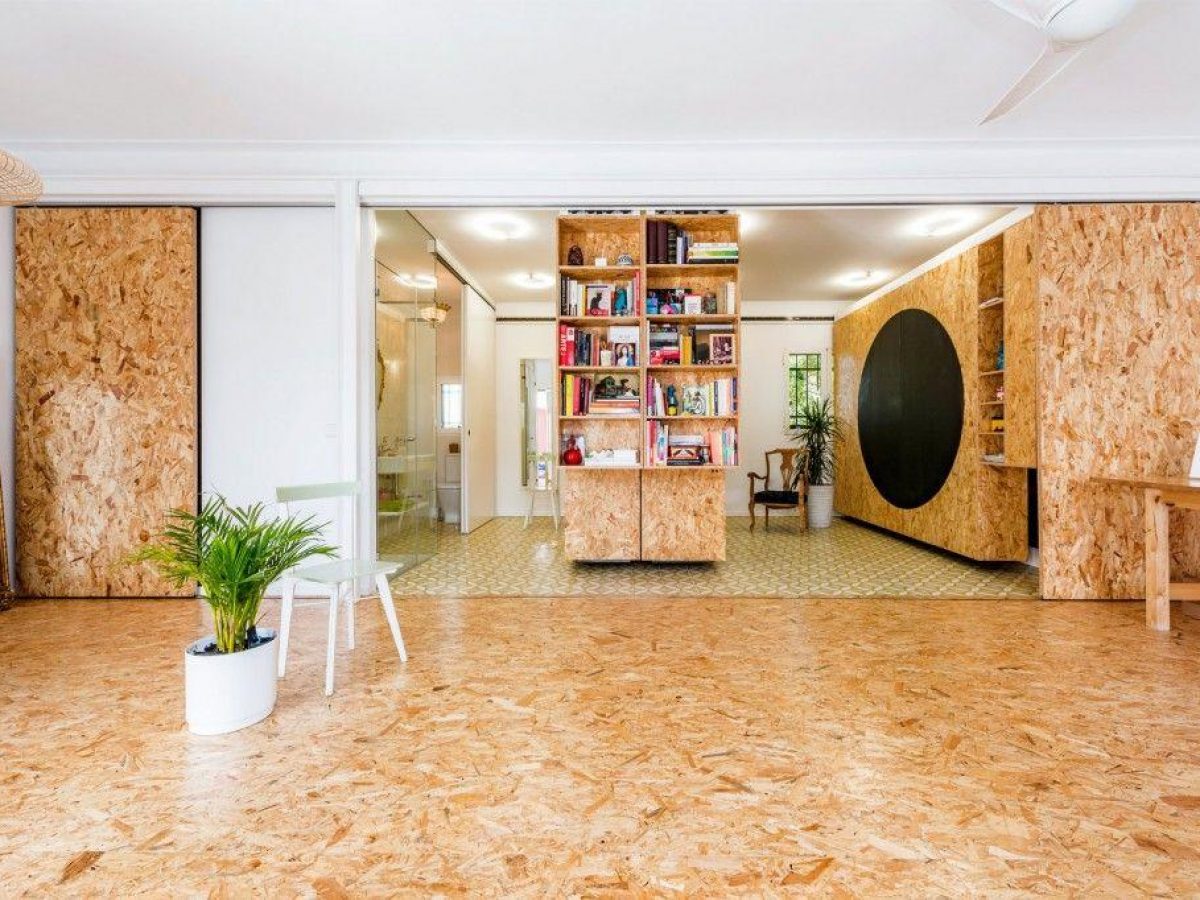
Oriented Strand Board (OSB) refers to an engineered wood structural panel manufactured from rectangular wood strands arranged in specific orientations and bonded with waterproof synthetic resin adhesives under heat and pressure to create a strong, dimensionally stable building material. This cost-effective alternative to plywood features strands oriented perpendicular to each other in multiple layers, providing excellent structural properties for sheathing, subflooring, and general construction applications while utilizing fast-growing wood species and manufacturing efficiency that makes it widely available and economically competitive in residential and commercial construction markets.
Oriented Strand Board (OSB)
|
|
|---|---|
| Category | Engineered Wood |
| Subfield | Building Materials, Wood Technology, Construction Panels |
| Key Characteristics | Oriented strands, structural strength, cost-effectiveness |
| Primary Applications | Wall sheathing, roof decking, subflooring, structural panels |
| Industry Impact | Construction efficiency, material economics, forest utilization |
| Sources: APA Standards, ASTM Specifications, Building Code Requirements, Manufacturer Guidelines | |
Other Names
OSB, oriented strandboard, structural strand board, engineered strand board, composite panel, structural sheathing, strand board
History
1960s-1970s: Development and Innovation
OSB technology was developed in the 1960s as a response to declining availability of large-diameter trees suitable for plywood production and the need for cost-effective structural panel alternatives. Early research focused on optimizing strand geometry, orientation patterns, and adhesive systems to create panels with structural properties comparable to plywood while using smaller trees and wood residues. Initial production faced challenges with consistency, moisture resistance, and market acceptance as builders were unfamiliar with the new material’s characteristics and performance.
1980s: Commercial Development
Commercial OSB production expanded rapidly during the 1980s as manufacturing processes improved and building codes began recognizing OSB as an acceptable alternative to plywood for structural applications. The development of waterproof phenolic and isocyanate adhesive systems significantly improved moisture resistance and durability, addressing early performance concerns. Cost advantages over plywood and consistent availability drove market acceptance, particularly in residential construction where structural performance requirements could be met at lower material costs.
1990s: Market Expansion and Standardization
The 1990s saw dramatic expansion of OSB production capacity and market share as manufacturers perfected production techniques and builders gained confidence in material performance. Industry standardization through organizations like the American Plywood Association (APA) established performance standards and quality certification programs that ensured consistent product quality. Building code acceptance expanded to include engineered applications, and span tables were developed to guide proper structural use in various construction applications.
2000s: Technology Advancement
Advanced manufacturing technologies including computerized process control, improved strand geometry, and enhanced adhesive systems further improved OSB performance and consistency while reducing production costs. Research into surface treatments, edge sealing, and specialized formulations addressed specific application needs including moisture resistance and dimensional stability. Environmental considerations drove development of formaldehyde-free adhesives and sustainable forestry practices in raw material sourcing.
2010s-Present: Specialized Products and Innovation
Modern OSB production includes specialized products for specific applications including structural insulated panels (SIPs), radiant barrier sheathing, and enhanced moisture-resistant formulations. Advanced manufacturing techniques enable production of thicker panels, specialty surface treatments, and integrated building system components. Sustainability initiatives focus on carbon sequestration benefits, renewable material sourcing, and end-of-life recyclability as environmental considerations become increasingly important in material selection decisions.

Technical Specifications
Manufacturing Process and Structure
OSB manufacturing begins with debarked logs processed into rectangular wood strands typically 0.025 inches thick, 0.75-1.5 inches wide, and 3-6 inches long that are dried to optimal moisture content for adhesive bonding. Strands are coated with waterproof adhesive and arranged in multiple layers with surface layers oriented parallel to panel length and core layers oriented perpendicular to provide structural strength in both directions. Hot pressing at temperatures of 400-450°F and pressures of 600-800 PSI bonds the strands into solid panels with densities typically ranging from 38-50 pounds per cubic foot.
Performance Standards and Classifications
OSB performance is classified according to Voluntary Product Standard PS-2 and APA performance standards that establish structural properties, moisture resistance, and dimensional stability requirements for different applications. Exposure durability classifications include Exposure 1 for structural applications with occasional moisture exposure and Exterior for permanent weather exposure applications. Structural properties including bending strength, stiffness, and shear strength are verified through standardized testing to ensure code compliance and proper engineering values for construction applications.
Applications
Wall Sheathing and Structural Applications
OSB wall sheathing provides lateral force resistance for wood frame construction while serving as a substrate for exterior cladding systems including siding, stucco, and masonry veneer. Structural sheathing applications require panels to meet specific strength and stiffness requirements that enable proper load transfer from roof and floor systems to foundation elements. Installation techniques including proper fastening schedules, edge support, and moisture management ensure optimal structural performance and long-term durability in building envelope applications.
Roof Decking and Subflooring
Roof decking applications utilize OSB’s structural properties to support roofing loads while providing a stable substrate for roofing materials including asphalt shingles, metal roofing, and membrane systems. Subflooring applications require specific stiffness characteristics to prevent excessive deflection under live loads while providing a smooth, stable surface for finish flooring materials. Moisture management considerations are critical in both applications to prevent degradation and maintain structural performance over building service life.
Best Practices
Installation and Handling
Proper OSB installation requires attention to moisture management, fastening requirements, and edge support to ensure optimal performance and longevity in building applications. Storage and handling procedures protect panels from moisture exposure and physical damage that could affect performance, with particular attention to edge protection and proper stacking techniques. Installation should follow manufacturer guidelines and building code requirements for fastening schedules, panel spacing, and integration with other building system components.
Moisture Management and Protection
Effective moisture management includes proper building envelope design, installation of weather barriers, and construction sequencing that minimizes moisture exposure during construction. Edge sealing and gap management prevent water infiltration that could cause swelling or delamination, particularly at panel joints and penetrations. Vapor control strategies ensure appropriate moisture management while preventing condensation problems that could affect panel performance and building durability.
Industry Standards
Manufacturing and Quality Standards
American Plywood Association (APA) performance standards establish comprehensive requirements for OSB manufacturing including raw material specifications, adhesive systems, and quality control procedures that ensure consistent product performance. ASTM International standards provide testing methods and performance criteria for structural properties, moisture resistance, and dimensional stability verification. Voluntary Product Standard PS-2 establishes uniform grading rules and marking requirements that enable proper material selection and application by builders and engineers.
Building Code Acceptance
International Building Code (IBC) and International Residential Code (IRC) recognize OSB as an acceptable structural panel material with specific allowable spans, fastening requirements, and application limitations based on product certification and testing. Model building codes reference industry standards and testing protocols that ensure OSB products meet minimum performance requirements for structural safety and durability. Local building codes may impose additional requirements based on regional climate conditions and construction practices.
Key Considerations
Planning Phase
OSB selection should consider structural requirements, moisture exposure conditions, and economic factors including material costs, labor requirements, and long-term performance characteristics. Application-specific requirements including span capabilities, fastening compatibility, and substrate preparation needs affect material selection and installation planning. Budget considerations should include both initial material costs and potential long-term maintenance or replacement costs based on application conditions and expected service life.
Implementation
Installation planning should address weather protection, construction sequencing, and quality control measures that ensure proper performance and prevent moisture-related problems during construction. Fastening requirements and installation techniques must comply with manufacturer specifications and building code requirements for structural adequacy and long-term performance. Quality control procedures verify proper installation and identify potential problems before they affect building performance or require costly corrections.
Environmental Considerations
Moisture exposure during construction and service life significantly affects OSB performance, requiring careful attention to weather protection, building envelope design, and construction practices that minimize water infiltration. Temperature and humidity variations can cause dimensional changes that must be accommodated through proper installation techniques and building design details. Ventilation and moisture control strategies help maintain appropriate environmental conditions for optimal OSB performance.
Structural Requirements
Structural applications require verification of load-carrying capacity, deflection limits, and connection details to ensure code compliance and safety throughout building service life. Engineering analysis may be required for non-standard applications or loading conditions that exceed prescriptive code provisions. Connection design must consider OSB material properties and ensure adequate load transfer to supporting structural elements.
Quality Control
Material inspection should verify grade stamps, dimensions, and condition before installation to ensure products meet specification requirements and perform as intended. Installation inspection verifies proper fastening, spacing, and integration with building envelope components for optimal performance and code compliance. Documentation of material certifications and installation procedures provides verification of compliance and reference for future maintenance or modifications.
Common Issues
Moisture exposure can cause swelling, delamination, or strength loss that compromises structural performance and requires panel replacement or structural reinforcement. Improper installation including inadequate fastening, excessive gaps, or missing edge support can result in structural deficiencies and building code violations. Manufacturing defects including delamination, edge damage, or dimensional variations may require material replacement and affect construction scheduling and costs.
Project Impact
Cost and Construction Efficiency
OSB typically costs 15-30% less than comparable plywood products while providing similar structural performance, resulting in significant material cost savings for large construction projects. Consistent availability and standardized dimensions enable efficient construction scheduling and reduce material procurement challenges compared to some plywood products. Installation efficiency benefits include lighter weight for easier handling and consistent quality that reduces material rejection and rework during construction.
Structural Performance and Durability
Properly installed OSB provides reliable structural performance comparable to plywood for most construction applications while meeting building code requirements for safety and durability. Long-term performance depends on appropriate application selection, proper installation, and effective moisture management throughout building service life. Quality OSB products demonstrate excellent dimensional stability and structural integrity when used within appropriate design parameters and environmental conditions.
Industry Impact
Forest Resource Utilization
OSB manufacturing utilizes smaller trees and lower-grade wood materials that might otherwise be considered waste products, improving overall forest resource efficiency and sustainability. Fast-growing tree species can be effectively used for OSB production, enabling sustainable forestry practices and reducing pressure on old-growth forest resources. Manufacturing efficiency and yield optimization reduce waste and environmental impact compared to solid wood products requiring larger, higher-quality logs.
Construction Industry Economics
Widespread OSB adoption has significantly affected construction economics by providing cost-effective alternatives to traditional plywood products while maintaining structural performance and building code compliance. Manufacturing capacity and distribution networks ensure consistent availability and competitive pricing that benefit builders and property owners. Innovation in OSB technology continues to expand application possibilities and improve performance characteristics while maintaining economic advantages.
Current Debates
Environmental Impact and Sustainability
The construction industry continues to debate the environmental impacts of OSB production including energy consumption, emissions, and adhesive chemistry compared to alternative materials and traditional wood products. Proponents emphasize renewable material content, carbon sequestration benefits, and efficient resource utilization, while critics raise concerns about manufacturing emissions and adhesive formulations. Life cycle assessment studies provide data for informed decision-making about environmental impacts and sustainability considerations.
Performance vs. Cost Trade-offs
Ongoing discussions address the appropriate balance between cost savings and performance characteristics when selecting OSB versus plywood or other structural panel alternatives for specific applications. Some designers prefer plywood for critical applications requiring maximum moisture resistance or structural performance, while others argue that properly specified OSB provides adequate performance at significant cost savings. Application-specific performance requirements and risk tolerance affect material selection decisions.
Related Technologies
Advanced Manufacturing Processes
Computer-controlled manufacturing systems enable precise control of strand orientation, adhesive application, and pressing parameters that optimize OSB performance and consistency while reducing production costs. Advanced adhesive systems including moisture-resistant formulations and formaldehyde-free options improve environmental characteristics and expand application possibilities. Quality control systems including automated inspection and testing ensure consistent product quality and performance verification throughout production.
Engineered Building Systems
Structural insulated panels (SIPs) and other engineered building systems incorporate OSB facing materials with insulation cores to create high-performance building components with enhanced thermal properties. Prefabricated building components and modular construction systems utilize OSB for cost-effective structural performance in factory-built construction applications. Integration with modern building envelope technologies including air barriers and moisture management systems optimizes OSB performance in high-efficiency building applications.
Research and Development
Performance Enhancement Research
Ongoing research focuses on improving OSB moisture resistance, dimensional stability, and structural properties through advanced strand processing, adhesive chemistry, and manufacturing techniques. Studies of long-term performance in various climate conditions provide data for improving material specifications and application guidelines. Research into surface treatments and protective coatings explores methods for enhancing durability and expanding application possibilities.
Sustainable Manufacturing Innovation
Development of bio-based adhesives and sustainable manufacturing processes addresses environmental concerns while maintaining or improving OSB performance characteristics. Research into carbon sequestration potential and life cycle environmental impacts provides data for sustainable construction decision-making. Innovation in raw material sourcing including agricultural residues and alternative fiber sources explores opportunities for reducing environmental impact and improving resource efficiency.
FAQs
How does OSB compare to plywood for structural applications?
OSB provides comparable structural performance to plywood for most construction applications including wall sheathing, roof decking, and subflooring, with similar strength and stiffness properties when properly specified and installed. OSB typically costs 15-30% less than plywood while offering consistent availability and quality. However, plywood may have advantages in applications requiring maximum moisture resistance or smooth surface finish, and some contractors prefer plywood’s familiar handling characteristics.
What are the moisture resistance characteristics of OSB?
Modern OSB products use waterproof adhesives that maintain structural integrity when exposed to moisture, but prolonged water exposure can cause swelling and dimensional changes. Exposure 1 rated OSB is suitable for structural applications with occasional moisture exposure during construction, while Exterior grade OSB can withstand permanent weather exposure. Proper building envelope design and moisture management are essential for optimal OSB performance regardless of grade.
What installation requirements are specific to OSB panels?
OSB installation requires proper fastening schedules according to building codes and manufacturer specifications, with specific requirements for fastener type, spacing, and edge distances. Panel spacing of 1/8 inch at ends and edges accommodates expansion, while continuous edge support may be required for certain applications. Weather protection during installation and proper moisture management details are critical for preventing moisture-related problems and ensuring long-term performance.
Can OSB be used in all the same applications as plywood?
OSB can be used in most structural applications where plywood is acceptable, including wall sheathing, roof decking, and subflooring, when properly specified and installed according to building codes. However, some specialty applications may favor plywood, such as exterior siding applications requiring smooth surfaces or marine applications requiring maximum moisture resistance. Building codes and manufacturer guidelines provide specific application limitations and requirements for OSB use.
What quality markings should I look for when purchasing OSB?
Quality OSB should display APA grade stamps indicating performance category, exposure durability classification, and manufacturing standards compliance. Look for proper thickness markings, span ratings for intended applications, and mill identification for quality assurance. Panels should be free from delamination, excessive edge damage, or dimensional irregularities that could affect installation and performance. Store panels properly to prevent moisture damage before installation.
References
- APA Standards. (2023). APA – The Engineered Wood Association – Performance Standards for Structural Wood Panels.
- ASTM Specifications. (2023). ASTM International – Standard Specifications for Oriented Strand Board Performance.
- Building Code Requirements. (2023). International Code Council – Building Code Provisions for Structural Panel Applications.
- Manufacturer Guidelines. (2023). Structural Board Association – OSB Installation and Application Guidelines.