
Quality Assurance refers to the systematic process of ensuring that construction projects meet specified standards, codes, and performance requirements through planned activities including inspection, testing, documentation, and corrective action procedures that prevent defects and verify compliance throughout all phases of design and construction. This essential management discipline encompasses both quality control activities that detect and correct problems and quality assurance processes that prevent problems through proper planning, training, and systematic implementation of proven procedures that protect project stakeholders and ensure successful project outcomes that meet or exceed expectations.
Quality Assurance
|
|
|---|---|
| Category | Project Management, Quality Control |
| Subfield | Construction Administration, Risk Management, Performance Verification |
| Key Characteristics | Systematic processes, defect prevention, compliance verification |
| Primary Applications | Construction oversight, material testing, performance verification |
| Industry Impact | Project success, risk reduction, client satisfaction |
| Sources: ISO Standards, ASTM Requirements, Industry Best Practices, Professional Guidelines | |
Other Names
QA, quality control, QC, quality management, construction quality assurance, project quality management, quality verification, performance assurance
History
1920s-1940s: Industrial Quality Management Origins
Quality assurance concepts emerged from manufacturing industries during the early 20th century as mass production techniques required systematic approaches to maintaining product quality and reducing defects. Statistical quality control methods developed by pioneers including Walter Shewhart and W. Edwards Deming provided mathematical tools for monitoring and improving manufacturing processes. Early construction applications focused primarily on materials testing and basic inspection procedures for large infrastructure projects including dams, bridges, and military installations.
1950s-1970s: Construction Industry Adoption
Post-World War II construction boom drove adoption of quality assurance principles in building construction as project complexity increased and liability concerns grew among contractors and design professionals. Government construction projects began requiring formal quality assurance plans and independent testing services to ensure compliance with specifications and performance standards. Professional organizations including the American Society for Quality (ASQ) began developing construction-specific quality standards and training programs for industry professionals.
1980s-1990s: Systematic Quality Management
Total Quality Management (TQM) concepts influenced construction industry practices by emphasizing customer satisfaction, continuous improvement, and employee involvement in quality processes. ISO 9000 quality management standards provided frameworks for systematic quality assurance programs that could be applied to construction projects and organizations. Computer technology enabled more sophisticated data collection, analysis, and reporting systems that improved quality control efficiency and documentation accuracy.
2000s-2010s: Risk-Based Quality Assurance
Risk management principles became integrated with quality assurance practices as the construction industry recognized the relationship between quality defects and project risks including cost overruns, schedule delays, and liability exposure. Advanced testing equipment and real-time monitoring systems enabled more comprehensive quality verification with faster turnaround times and improved accuracy. Lean construction principles emphasized waste reduction and value creation through improved quality processes and defect prevention strategies.
2010s-Present: Digital Quality Management
Digital technology including mobile devices, cloud computing, and data analytics transformed quality assurance practices by enabling real-time documentation, automated reporting, and predictive quality analysis. Building Information Modeling (BIM) integration allows quality requirements to be embedded in digital models and tracked throughout construction processes. Artificial intelligence and machine learning applications provide automated defect detection and quality trend analysis that enhance traditional inspection and testing procedures.
Technical Specifications
Quality Assurance Plan Components
Comprehensive quality assurance plans include project-specific quality objectives, organizational responsibilities, inspection and testing procedures, documentation requirements, and corrective action protocols that ensure systematic quality management throughout project execution. Quality control points are established at critical construction phases including material delivery, installation milestones, and completion stages to verify compliance before subsequent work proceeds. Non-conformance procedures define responsibilities and timelines for identifying, documenting, and correcting quality defects to prevent impact on project schedule and performance.
Testing and Inspection Standards
Quality assurance testing follows established standards including ASTM International specifications, manufacturer requirements, and project-specific criteria that define acceptable performance limits and testing methods. Inspection frequencies and sample sizes are determined based on risk assessment, material criticality, and historical performance data to ensure adequate quality verification without excessive cost or schedule impact. Documentation standards require detailed records of all testing and inspection activities including test results, non-conformance reports, and corrective actions for future reference and warranty support.
Applications
Materials Testing and Verification
Materials quality assurance includes incoming inspection, conformance testing, and performance verification to ensure all construction materials meet specification requirements and project standards. Testing procedures cover structural materials including concrete, steel, and wood products as well as specialized materials including waterproofing, insulation, and mechanical systems components. Chain of custody procedures and certified testing laboratories ensure test result validity and provide legally defensible documentation for warranty and liability purposes.
Construction Process Quality Control
Construction quality control focuses on workmanship verification, installation compliance, and system performance testing to ensure built work meets design intent and performance requirements. Process control includes verification of construction tolerances, joint details, connections, and integration between different building systems and components. Progressive inspection and testing throughout construction phases enables early detection and correction of quality issues before they become expensive problems or affect subsequent work.
Best Practices
Proactive Quality Planning
Effective quality assurance begins during project planning with development of comprehensive quality plans that identify critical quality requirements, potential risk areas, and appropriate verification methods. Quality planning should involve all project stakeholders including designers, contractors, suppliers, and owners to ensure shared understanding of quality expectations and responsibilities. Regular plan updates accommodate design changes, field conditions, and lessons learned to maintain quality assurance effectiveness throughout project execution.
Communication and Documentation
Clear communication protocols ensure quality issues are promptly identified, reported, and resolved before they impact project progress or performance. Documentation standards require detailed records of all quality activities including inspection reports, test results, photographs, and corrective actions for future reference and legal protection. Digital documentation systems enable real-time access to quality information and facilitate coordination among project team members and stakeholders.
Industry Standards
International Quality Management Standards
ISO 9001 quality management standards provide frameworks for systematic quality assurance programs that can be adapted to construction projects and organizations of various sizes and complexity levels. American Society for Quality (ASQ) standards and guidelines offer construction-specific guidance for implementing effective quality assurance programs and training quality professionals. Professional certification programs ensure quality assurance personnel have appropriate knowledge and skills for effective program implementation and management.
Construction-Specific Quality Standards
Construction industry organizations including the Associated General Contractors (AGC) and Construction Management Association of America (CMAA) provide best practice guidelines for construction quality assurance programs. Specialty trade organizations develop specific quality standards for their respective construction activities including concrete placement, steel erection, and mechanical systems installation. Building codes and regulatory requirements establish minimum quality standards that must be met regardless of project-specific quality goals and requirements.
Key Considerations
Planning Phase
Quality assurance planning must consider project complexity, risk levels, budget constraints, and schedule requirements to develop appropriate quality verification strategies and resource allocation. Quality objectives should be clearly defined and measurable to enable objective evaluation of quality performance throughout project execution. Stakeholder roles and responsibilities must be clearly established to ensure effective coordination and accountability for quality outcomes.
Implementation
Quality assurance implementation requires adequate staffing, equipment, and training to ensure effective program execution without compromising project schedule or budget constraints. Regular monitoring and review of quality performance enables early identification of problems and implementation of corrective actions before they affect project outcomes. Flexibility in quality procedures accommodates changing conditions while maintaining essential quality verification and documentation requirements.
Resource Allocation
Quality assurance costs typically represent 1-3% of total project costs but provide significant value through defect prevention, risk reduction, and improved project outcomes. Resource planning must balance quality verification needs with project constraints while ensuring adequate coverage of critical quality control points. Cost-benefit analysis helps optimize quality assurance investments by focusing resources on highest-risk areas and most critical quality requirements.
Technology Integration
Digital quality assurance tools including mobile applications, cloud databases, and automated reporting systems can significantly improve efficiency and accuracy while reducing administrative burden. Integration with project management systems enables real-time quality status reporting and trend analysis that supports proactive quality management decisions. Technology selection should consider user capabilities, system compatibility, and long-term support requirements to ensure effective implementation and adoption.
Stakeholder Coordination
Effective quality assurance requires coordination among diverse stakeholders including owners, designers, contractors, suppliers, and regulatory agencies with different perspectives and priorities. Communication protocols must accommodate different technical knowledge levels and ensure critical quality information reaches appropriate decision-makers in timely manner. Conflict resolution procedures help address quality-related disputes while maintaining project progress and stakeholder relationships.
Common Issues
Inadequate quality planning often results in unclear expectations, insufficient resources, and reactive rather than proactive quality management that increases costs and schedule risks. Poor communication and documentation can lead to quality issues being overlooked or inadequately addressed, resulting in expensive rework and potential safety hazards. Insufficient training or resources for quality assurance personnel may compromise program effectiveness and lead to inconsistent quality verification and documentation.
Project Impact
Risk Reduction and Cost Control
Effective quality assurance significantly reduces project risks including cost overruns, schedule delays, safety incidents, and warranty claims by identifying and correcting problems early in construction process. Quality-related cost savings typically exceed quality assurance program costs by factors of 3-10 through defect prevention and reduced rework requirements. Long-term benefits include reduced maintenance costs, improved building performance, and enhanced client satisfaction that supports business development and reputation.
Performance and Reliability Benefits
Systematic quality assurance ensures construction projects meet or exceed specified performance requirements including structural integrity, energy efficiency, and operational reliability throughout building service life. Quality verification provides documentation and confidence that building systems will perform as designed while meeting regulatory requirements and industry standards. Improved quality consistency reduces variability in project outcomes and builds confidence among stakeholders for future projects and business relationships.
Industry Impact
Professional Standards Development
Construction industry quality assurance practices have driven development of professional standards, certification programs, and best practice guidelines that improve overall industry performance and reliability. Quality assurance requirements in construction contracts and specifications have elevated industry standards and encouraged investment in quality management capabilities among contractors and suppliers. Research and development in quality assurance methods continues to improve construction industry effectiveness and client satisfaction.
Technology and Innovation Advancement
Quality assurance needs have driven development of advanced testing equipment, digital documentation systems, and analytical tools that benefit the broader construction industry and related technical fields. Innovation in non-destructive testing, real-time monitoring, and predictive analysis enhances quality verification capabilities while reducing costs and schedule impacts. Integration of quality assurance with building information modeling and project management systems improves overall project delivery efficiency and effectiveness.
Current Debates
Technology vs. Human Judgment
The construction industry continues to debate the appropriate balance between automated quality verification systems and human expertise in quality assurance programs. Proponents of technology integration emphasize consistency, objectivity, and efficiency benefits, while traditionalists argue for the importance of experienced judgment and contextual understanding in quality evaluation. Hybrid approaches that combine technological capabilities with human oversight appear to offer optimal solutions for most applications.
Cost vs. Quality Trade-offs
Ongoing discussions address the appropriate level of quality assurance investment relative to project budgets and risk tolerance, particularly in competitive bidding environments where cost pressures may limit quality assurance resources. Some argue for minimum quality assurance standards regardless of project size or budget, while others advocate for risk-based approaches that scale quality assurance efforts to project characteristics and stakeholder requirements. Value engineering approaches seek to optimize quality assurance effectiveness while managing costs and schedule impacts.
Related Technologies
Digital Documentation and Reporting
Cloud-based quality management systems enable real-time documentation, automated reporting, and centralized data storage that improves quality assurance efficiency and accessibility. Mobile applications allow field personnel to document quality issues, capture photographs, and generate reports immediately without returning to office facilities. Integration with project management and accounting systems provides comprehensive project quality tracking and cost analysis capabilities.
Advanced Testing and Monitoring
Non-destructive testing equipment including ground-penetrating radar, thermal imaging, and ultrasonic testing enables quality verification without damaging completed work or requiring invasive investigation procedures. Real-time monitoring systems can track construction conditions including temperature, humidity, and structural movement to ensure quality requirements are maintained throughout construction and early occupancy periods. Automated data collection and analysis reduce human error while providing more comprehensive quality documentation.
Research and Development
Predictive Quality Analytics
Machine learning and artificial intelligence applications analyze historical quality data to predict potential quality issues and recommend preventive actions before problems occur. Advanced analytics identify quality trends and patterns that enable proactive quality management and continuous improvement of quality assurance processes. Integration with building sensors and monitoring systems provides ongoing quality verification throughout building operation and maintenance phases.
Integrated Quality Management Systems
Development of comprehensive quality management platforms that integrate design, construction, and operation phases provides continuous quality assurance throughout building lifecycle. Building Information Modeling (BIM) integration enables quality requirements to be embedded in digital models and automatically verified during construction and commissioning processes. Interoperability standards facilitate data exchange between different quality assurance tools and project management systems for seamless quality management workflows.
FAQs
What is the difference between quality assurance and quality control?
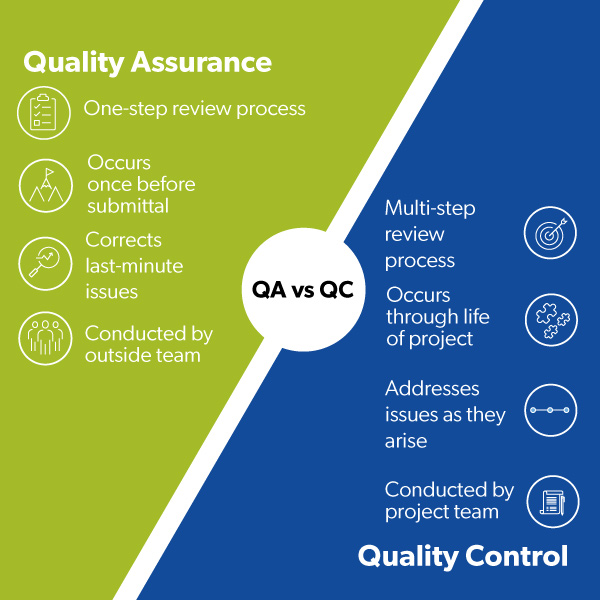
Quality assurance focuses on preventing defects through systematic planning, procedures, and process management, while quality control involves detecting and correcting defects through inspection and testing activities. Quality assurance is proactive and process-oriented, establishing systems and procedures to ensure quality outcomes, whereas quality control is reactive and product-oriented, verifying that completed work meets requirements. Effective quality management programs incorporate both quality assurance and quality control elements for comprehensive quality management.
Who is responsible for quality assurance on construction projects?
Quality assurance responsibility is typically shared among project stakeholders including owners who establish quality requirements, designers who specify quality standards, and contractors who implement quality control procedures during construction. Third-party quality assurance consultants may provide independent verification and testing services, while building officials conduct regulatory inspections for code compliance. Clear definition of quality responsibilities in project contracts and agreements prevents confusion and ensures adequate quality coverage.
What documentation is required for construction quality assurance?
Quality assurance documentation typically includes quality plans, inspection reports, test results, non-conformance reports, corrective action records, and material certifications that provide evidence of quality compliance and performance verification. Photographic documentation and daily quality logs provide additional evidence of quality conditions and activities throughout construction. Digital documentation systems enable efficient storage, retrieval, and sharing of quality records for warranty support and future reference.
How much should projects budget for quality assurance activities?
Quality assurance costs typically range from 1-3% of total project costs depending on project complexity, risk levels, and quality requirements, with higher percentages justified for critical or high-risk projects. Budget allocation should consider both internal quality control activities and external testing and inspection services required for specification compliance and regulatory approval. Cost-benefit analysis demonstrates that quality assurance investments typically provide returns of 3-10 times the investment through defect prevention and risk reduction.
What training is required for quality assurance personnel?
Quality assurance personnel should have appropriate technical education and experience for their specific responsibilities, with many positions requiring professional certification from organizations including ASQ, ACI, or specialty trade associations. Training requirements include understanding of applicable codes and standards, inspection and testing procedures, documentation requirements, and communication skills for effective stakeholder interaction. Continuing education ensures quality assurance personnel stay current with evolving technologies, standards, and best practices in their fields.
References
- ASTM Requirements. (2023). ASTM International – Quality Assurance Testing and Inspection Standards.
- Industry Best Practices. (2023). Associated General Contractors – Construction Quality Management Guidelines.
- ISO Standards. (2023). International Organization for Standardization – ISO 9001 Quality Management Systems.
- Professional Guidelines. (2023). American Society for Quality – Construction Quality Assurance Best Practices.