Maryland’s I-270 corridor houses over 350 biotechnology companies, creating the largest concentration of biotech firms on the East Coast. These innovative companies require sophisticated laboratory renovation projects that balance cutting-edge research capabilities with collaborative workspace design. From Rockville to Gaithersburg, biotech facilities demand specialized construction expertise that understands both scientific requirements and business growth planning.
Modern laboratory renovation projects in the I-270 corridor must address evolving research needs while maintaining strict regulatory compliance. According to the Maryland Department of Commerce, the state’s biotech sector employs over 45,000 workers and generates $15 billion annually, driving continuous demand for advanced research facilities.
1. Open Concept Office Integration with Laboratory Renovation
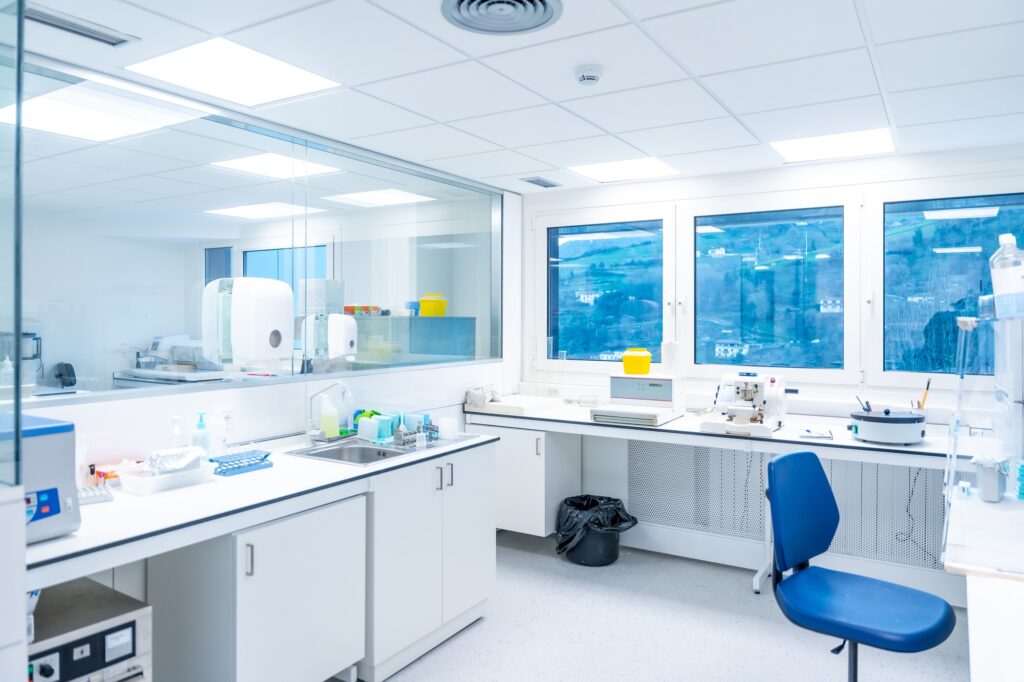
Modern biotech companies require seamless integration between administrative and research functions through open-concept office design that maintains necessary separation from laboratory areas. Strategic laboratory renovation creates collaborative workspaces that foster innovation while ensuring safety and compliance.
Office Integration Strategies:
- Glass partition systems that provide visual connection with sound isolation
- Shared conference rooms positioned between office and lab zones
- Hot-desking areas that accommodate rotating research staff
- Technology integration points for seamless data sharing
- Flexible furniture systems that adapt to changing team sizes
Companies in Rockville and Bethesda particularly benefit from open office designs that attract top talent while maintaining the collaborative culture essential for biotech innovation.
2. Biosafety Barriers and Containment Systems
Effective laboratory renovation requires sophisticated barrier systems that protect both personnel and research integrity while allowing necessary workflow between spaces. These systems must meet NIH guidelines while supporting operational efficiency.
Containment Design Elements:
- Airlocks with interlocking door systems for contamination control
- Pressure differential monitoring with automated alerts
- HEPA filtration systems with redundant backup capabilities
- Chemical fume hoods with variable air volume controls
- Emergency shower and eyewash stations strategically positioned
Research from the CDC’s Biosafety in Microbiological and Biomedical Laboratories guidelines ensures all barrier systems meet current safety standards while supporting productive research environments.
3. Flexible Infrastructure for Equipment Integration
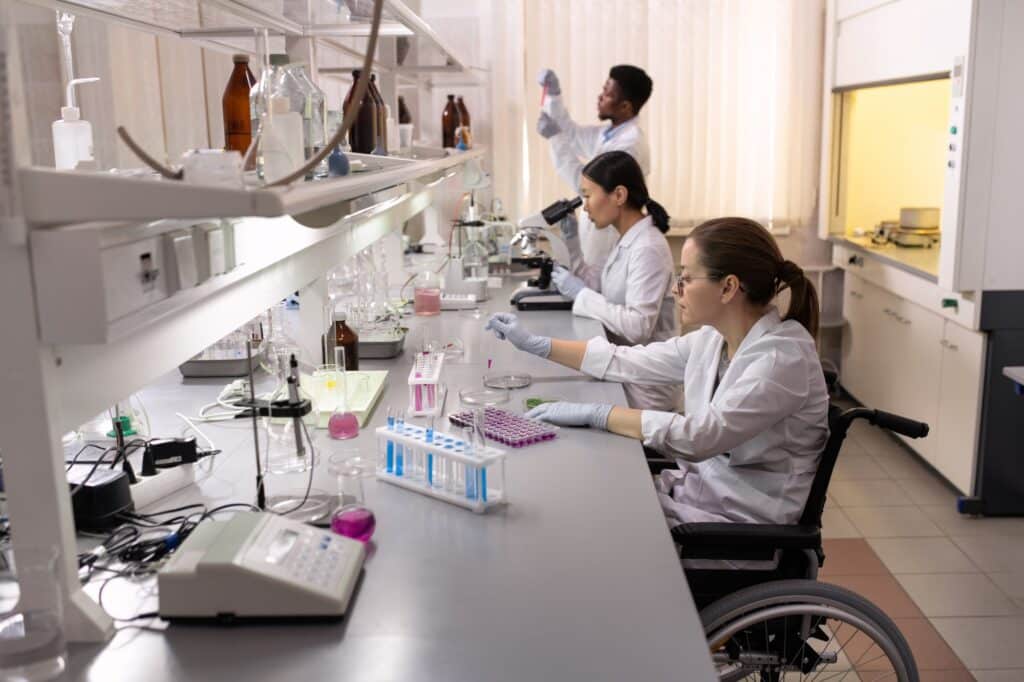
Successful laboratory renovation incorporates flexible utility systems that accommodate evolving research equipment without requiring major construction modifications. This approach reduces downtime and supports rapid response to research opportunities.
Infrastructure Flexibility Features:
- Overhead utility distribution with accessible connection points
- Modular bench systems that reconfigure without plumbing changes
- Redundant electrical systems with backup power capabilities
- Compressed air and specialty gas distribution with isolation valves
- Data and communication infrastructure supporting high-speed connectivity
Gaithersburg facilities particularly benefit from flexible infrastructure that supports both startup companies and established pharmaceutical research operations.
4. Kitchenette and Break Area Design
Laboratory facilities require carefully designed food service areas that maintain separation from research spaces while providing comfortable break areas for staff. These spaces must address both convenience and safety considerations.
Break Area Safety Requirements:
- Physical separation from laboratory areas with dedicated ventilation
- Hand-washing stations with touchless operation
- Storage systems that prevent cross-contamination
- Microwave and refrigeration with easy sanitization features
- Seating arrangements that encourage team interaction
Montgomery County health department regulations require specific separation between food service and laboratory areas, making professional design essential for compliance.
Related Reading
- Smart Building Technology for Commercial Spaces – Discover integrated building automation systems that optimize laboratory environments while reducing energy costs and improving operational efficiency for research facilities.
- Commercial Space Planning and Design – Learn comprehensive space planning strategies that maximize research productivity while accommodating future growth and equipment changes in biotech facilities.
- Universal Design for Commercial Properties – Explore accessibility compliance requirements and design principles that create inclusive research environments while meeting ADA standards for laboratory facilities.
Laboratory Renovation Planning for Growth and Scalability
Modular Design Approaches
Smart laboratory renovation anticipates future expansion through modular design that accommodates changing research focus and team growth. This approach protects initial investments while supporting long-term business development.
Scalability Design Elements:
- Moveable wall systems that reconfigure without major construction
- Utility rough-ins for future equipment connections
- HVAC systems sized for expanded capacity
- Structural provisions for additional floor loading
- Technology infrastructure supporting increased data requirements
Companies along the I-270 corridor often experience rapid growth, making scalable design essential for maintaining competitive advantages without facility limitations.
Regulatory Compliance and Future-Proofing
Laboratory renovation must address current regulatory requirements while anticipating evolving standards that affect biotech research. Professional design ensures facilities remain compliant as regulations change.
Compliance Considerations:
- FDA Good Laboratory Practice requirements for pharmaceutical research
- NIH guidelines for federally funded research activities
- OSHA standards for laboratory safety and worker protection
- Environmental regulations for waste handling and disposal
- Local building codes specific to laboratory construction
The FDA’s Good Laboratory Practice regulations provide comprehensive guidance for laboratory design and operation standards.
Technology Integration in Modern Laboratory Renovation
Laboratory Information Management Systems
Contemporary laboratory renovation incorporates advanced technology infrastructure that supports digital research workflows and data management. These systems improve efficiency while ensuring data integrity and security.
Technology Infrastructure Requirements:
- High-speed network connectivity with redundant internet connections
- Cloud-based data storage with local backup systems
- Equipment monitoring and maintenance scheduling systems
- Access control integration with research project management
- Video conferencing capabilities for remote collaboration
Biotech companies in Silver Spring and Rockville increasingly rely on integrated technology systems that support both local research and global collaboration initiatives.
Environmental Monitoring and Control
Advanced environmental monitoring systems provide real-time data on laboratory conditions while maintaining optimal research environments and ensuring regulatory compliance.
Monitoring System Components:
- Temperature and humidity sensors with automated alerts
- Air quality monitoring for particle counts and chemical vapors
- Pressure monitoring with automatic system adjustments
- Equipment performance tracking with predictive maintenance
- Energy usage monitoring for cost optimization
Cost Considerations and Return on Investment
Investment Analysis for Laboratory Renovation
Professional laboratory renovation typically ranges from $200-$400 per square foot depending on complexity and specialty requirements. These investments provide significant returns through improved efficiency, regulatory compliance, and talent attraction.
Cost Factors:
- Specialty HVAC systems with precise environmental controls
- Cleanroom construction and certification requirements
- Utility infrastructure for research equipment support
- Regulatory compliance documentation and certification
- Technology integration and data management systems
According to industry research on laboratory construction costs, properly planned renovations recover initial investments through operational efficiency gains within 3-5 years.
Operational Efficiency Improvements
Well-executed laboratory renovation projects typically improve research productivity by 25-40% through better workflow design, enhanced equipment accessibility, and improved environmental controls.
Efficiency Benefits:
- Reduced equipment downtime through better maintenance access
- Improved workflow efficiency through strategic space planning
- Enhanced collaboration through integrated office and lab design
- Lower operating costs through energy-efficient systems
- Increased recruitment success through modern facility amenities
Project Management for Laboratory Renovation
Phased Construction Approaches
Laboratory renovation often requires phased construction that maintains ongoing research operations while upgrading facilities. This approach minimizes business disruption while ensuring continuous compliance.
Phased Construction Benefits:
- Continued research operations during renovation phases
- Reduced temporary relocation costs and logistics
- Opportunity to test new systems before full implementation
- Staged investment that aligns with business cash flow
- Risk mitigation through incremental system validation
Companies throughout Frederick County and Montgomery County benefit from phased approaches that maintain research momentum while achieving facility improvements.
Regulatory Approval and Certification
Professional project management ensures all regulatory approvals and certifications are obtained efficiently while maintaining construction schedules and budget requirements.
Approval Process Management:
- Building permit coordination with local authorities
- Biosafety committee reviews and approvals
- Environmental impact assessments where required
- Final inspections and certification documentation
- Ongoing compliance monitoring and reporting systems
Maryland’s I-270 corridor continues driving biotechnology innovation through world-class research facilities that support breakthrough discoveries. Professional laboratory renovation ensures these facilities meet evolving research needs while maintaining the safety and compliance standards essential for scientific excellence.
Our team brings 45+ years of construction experience to laboratory renovation projects throughout the I-270 corridor, understanding both the technical requirements and business pressures facing biotech companies. We specialize in creating flexible, compliant facilities that support research excellence while accommodating future growth and changing technology requirements.
Ready to transform your biotech facility into a modern research environment? Contact our team for a comprehensive laboratory renovation consultation that addresses your research requirements, regulatory compliance needs, and growth planning objectives throughout Maryland’s biotech corridor.