
The current real estate market presents DC Metro area homeowners with a critical decision: invest in comprehensive renovation of their existing property or navigate the challenging process of selling and buying in today’s competitive environment. Recent market data reveals compelling financial reasons why whole home renovation has become the smart alternative to moving for many families throughout Maryland, Virginia, and Washington DC.
According to the latest regional housing reports, median home prices in the DC Metro area have reached $650,000-$850,000 depending on location, with updated properties commanding significant premiums over homes needing renovation. Meanwhile, comprehensive renovation projects typically cost 40-60% less than the price difference between fixer-uppers and move-in ready homes, creating substantial savings opportunities for homeowners willing to invest in complete home transformation.
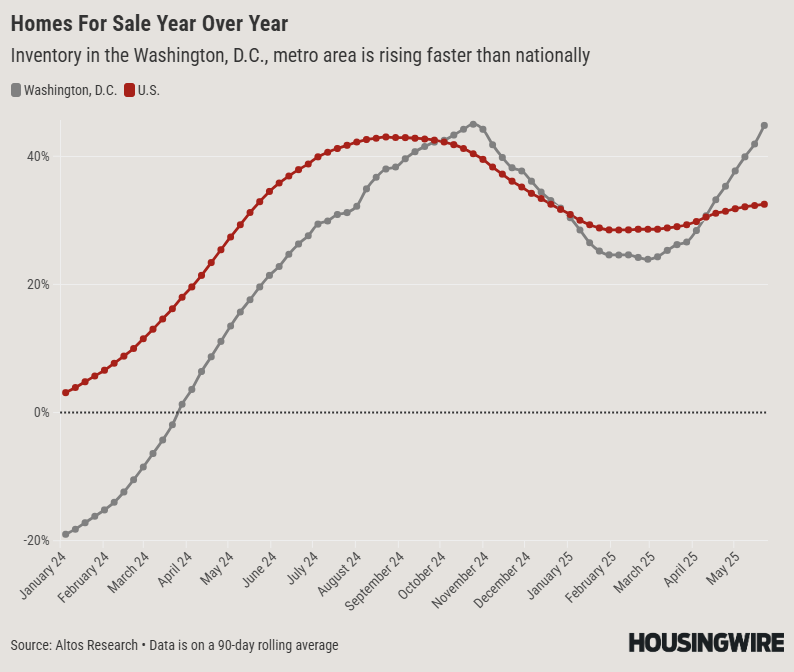
DC Metro Area Housing Market Reality (as of June 2025)
Price Appreciation and Inventory Challenges
Regional Price Trends: Montgomery County, Maryland median home prices average $725,000, while Arlington County reaches $850,000+ for comparable properties. Fairfax County shows similar trends with updated homes commanding $100,000-$200,000 premiums over properties needing comprehensive renovation. These market conditions make property modernization through renovation increasingly attractive compared to purchasing updated homes.
Limited Inventory Impact: The DC Metro area housing market currently shows 2-3 months of available inventory, well below the 6-month supply considered balanced. This shortage drives bidding wars and forces buyers to pay above asking prices, often waiving inspections and other protections that increase financial risk.
Interest Rate Environment: Current mortgage rates have risen significantly from historic lows, increasing monthly payments by hundreds of dollars compared to recent years. Homeowners with existing favorable mortgage rates face substantial payment increases when purchasing new properties, making renovation financing through home equity more attractive.
Hidden Costs of Moving
Transaction and Moving Expenses: Real estate commissions, closing costs, moving expenses, and temporary housing costs typically total $15,000-$25,000 for average DC Metro area transactions. These expenses don’t include time costs, work disruption, or emotional stress associated with relocating families and changing schools or commutes.
Property Tax Reassessment: Purchasing homes in many DC Metro area jurisdictions triggers property tax reassessments that can increase annual tax obligations substantially. Renovation projects on existing properties may increase assessments more gradually while maintaining established tax benefits.
Financial Analysis: Renovation vs Moving
Cost Comparison Framework
Comprehensive Renovation Investment: Complete home transformation projects in the DC Metro area typically range from $75-$150 per square foot depending on finishes and structural complexity. A 2,500 square foot home renovation might cost $200,000-$375,000 including all systems, structural updates, and high-end finishes.
Moving Cost Analysis: The financial impact of selling a $600,000 home and purchasing an $800,000 updated property includes:
- Real estate commissions and closing costs: $45,000-$60,000
- Moving and temporary housing expenses: $10,000-$15,000
- Down payment increase: $40,000 (assuming 20% down)
- Higher monthly mortgage payments: $800-$1,200 additional monthly
Net Investment Comparison: Comprehensive renovation allows homeowners to create $800,000 worth of updated home value through $250,000-$350,000 investment plus transaction savings, creating substantial equity advantages over moving alternatives.
Return on Investment Considerations
Immediate Equity Creation: Well-executed whole home renovations typically recover 70-85% of investment costs immediately upon completion, with remainder recovered through enhanced quality of life and future appreciation. This compares favorably to transaction costs of moving that provide no recoverable value.
Long-term Value Appreciation: Renovated homes in established DC Metro area neighborhoods often appreciate faster than average due to scarcity of updated properties and desirability of mature communities with established amenities and school systems.
Neighborhood and Lifestyle Advantages
Location Value Preservation
Established Community Benefits: Staying in familiar neighborhoods preserves relationships with neighbors, local businesses, and community organizations that contribute significantly to quality of life. These social connections often take years to rebuild after relocating and provide substantial non-financial value.
School District Continuity: Many DC Metro area families choose neighborhoods specifically for school quality and maintaining children in established programs avoids disruption and potential performance impacts. Quality school districts also support long-term property values more reliably than other factors.
Commute and Transportation: Established commute patterns, public transportation access, and proximity to employment centers represent substantial value that’s difficult to replicate in new locations. Metro access, walking commutes, and established routines contribute to both financial savings and life satisfaction.
Customization Opportunities
Personal Design Control: Comprehensive renovation allows complete customization of living spaces to family needs and preferences rather than compromising with existing home features that may not suit specific lifestyle requirements. This customization creates unique value that’s difficult to find in existing market inventory.
Quality Material Selection: Renovation projects allow homeowners to select materials, fixtures, and finishes that meet their quality standards and aesthetic preferences rather than accepting builder-grade selections common in many existing homes.
Market Timing Considerations
Current Market Disadvantages for Buyers
Competitive Bidding Environment: Limited inventory forces buyers into bidding wars that drive prices above fair market value while requiring waived inspections and other protections. These conditions create substantial financial risk and stress that renovation projects avoid entirely.
Inspection and Disclosure Limitations: Competitive markets often require waiving inspection contingencies, leaving buyers responsible for unknown problems discovered after closing. Comprehensive renovations address all property issues systematically while maintaining complete control over solutions and costs.
Renovation Market Advantages
Contractor Availability: Current market conditions provide good availability of qualified contractors and reasonable material costs compared to peak construction periods. Homeowners can often secure better pricing and scheduling for comprehensive renovation projects.
Financing Options: Home equity financing for renovations typically offers better terms than purchase mortgages while allowing homeowners to maintain existing favorable mortgage rates on their current properties.
Project Planning for Market Conditions
Comprehensive Renovation Scope
Complete Home Transformation Elements: Successful whole home renovations address structural updates, mechanical systems modernization, and aesthetic improvements simultaneously to create cohesive modern living environments that compete with new construction quality while preserving neighborhood character.
System Integration Planning: Modern renovations incorporate smart home technology, energy-efficient systems, and contemporary layouts that often exceed capabilities found in existing market inventory while being customized specifically for family needs.
Timeline and Logistics
Temporary Housing Strategies: Some comprehensive renovations allow families to remain in portions of their homes during construction while others require temporary relocation. Current rental market conditions should be considered when planning renovation timelines and logistics.
Seasonal Construction Planning: DC Metro area weather patterns affect renovation scheduling, with spring and fall providing optimal conditions for exterior work and system installations that minimize weather-related delays and complications.
Risk Management and Decision Factors
Renovation Project Risks
Budget and Timeline Management: Comprehensive renovations require careful budget management and realistic timeline expectations to avoid cost overruns and extended construction periods that could impact family life and financial planning.
Quality Control Requirements: Large renovation projects demand experienced contractors and careful quality control throughout construction phases to ensure investments create lasting value and avoid costly corrections or defects.
Market Risk Comparison
Property Value Volatility: Renovation investments in established neighborhoods typically show less volatility than purchases in rapidly appreciating areas where values may be artificially inflated by market conditions rather than intrinsic property value.
Future Marketability: Well-renovated homes in established neighborhoods typically maintain strong marketability across different economic conditions while properties purchased at market peaks may face value challenges during market corrections.
Decision Framework for Homeowners
Evaluation Criteria
Financial Readiness Assessment: Successful comprehensive renovations require adequate financial resources including contingency funds for unexpected issues while maintaining emergency reserves for family security during construction periods.
Lifestyle Compatibility: Renovation projects require flexibility and patience during construction phases that may last several months. Families should honestly assess their ability to manage construction disruption while maintaining work and school commitments.
Professional Consultation Benefits
Market Analysis Support: Experienced renovation contractors can provide market analysis that compares renovation costs with comparable home prices while identifying opportunities for value creation through strategic improvements.
Design and Planning Expertise: Professional design consultation ensures renovation investments create maximum value while avoiding common mistakes that reduce return on investment or create functional problems.
Frequently Asked Questions
How do I determine if renovation makes more financial sense than moving?
Compare total costs of comprehensive renovation plus transaction savings against net costs of selling and purchasing updated property including closing costs, moving expenses, and higher mortgage payments. Most DC Metro area scenarios favor renovation when families like their neighborhoods.
What if I can’t find my dream home in today’s market?
Current inventory limitations make finding ideal homes extremely difficult while comprehensive renovation allows creating exactly the living environment you want within your preferred neighborhood and commute patterns.
How long do comprehensive renovation projects take compared to moving timelines?
Moving processes typically take 2-4 months from listing to occupancy while comprehensive renovations require 3-6 months depending on scope. However, renovation timelines are more predictable and controllable than market-dependent moving processes.
What happens if renovation costs exceed estimates?
Professional contractors provide detailed estimates with contingency planning for common issues. Well-managed renovation projects typically stay within 10-15% of estimates while moving costs often exceed expectations due to market competition and hidden expenses.
Can renovated homes compete with new construction?
Modern renovation techniques and materials often exceed new construction quality while offering architectural character and neighborhood amenities unavailable in new developments. Many buyers prefer renovated homes in established neighborhoods over new construction in developing areas.
What financing options work best for comprehensive renovations?
Home equity loans, construction-to-permanent loans, and cash-out refinancing provide various options depending on existing mortgage terms and financial situations. Many homeowners find renovation financing more favorable than purchase mortgage terms in current rate environment.
Why Choose Renovation Over Moving in Today’s Market
Market Reality Assessment
Current DC Metro area market conditions create compelling advantages for comprehensive renovation over moving including substantial cost savings, neighborhood preservation, and customization opportunities unavailable through home purchasing in competitive markets.
Quality of Life Benefits
Staying in established neighborhoods preserves community connections, school continuity, and commute patterns while creating completely updated living environments through professional renovation that often exceeds quality available in existing market inventory.
Financial Strategy Advantages
Comprehensive renovation typically provides better return on investment than moving while avoiding transaction costs, property tax increases, and mortgage rate impacts that reduce long-term financial benefits of purchasing different properties.
Long-term Value Creation
Well-executed renovation projects create lasting value through quality improvements, energy efficiency upgrades, and modern amenities while preserving established neighborhood character that supports stable property appreciation over time.
Making the right decision between renovation and moving requires careful analysis of personal financial situations, lifestyle needs, and market conditions. Our team helps homeowners evaluate these factors while providing professional renovation services that create exceptional value through complete home transformation projects.
Every comprehensive renovation we complete demonstrates the advantages of staying and improving over moving and compromising in today’s challenging real estate market. These projects create dream homes within beloved neighborhoods while providing financial benefits that moving alternatives cannot match.
Ready to explore whether whole home renovation is right for you?
Contact our team for a detailed consultation that analyzes your specific circumstances and explores renovation options that could save money while creating your ideal living environment. We serve homeowners throughout Washington DC, Maryland, and Northern Virginia with professional analysis and renovation services that provide smart alternatives to moving in today’s market.